
How to organize car keys on key chain usually comes down to one thing: your setup has grown over time, but the hardware never caught up, so you end up with a bulky, noisy cluster that scratches your phone, pokes your leg, and wastes time when you just want to unlock the car.
A small change in layout can make your keychain feel lighter and behave better, even if you can’t remove many items. The trick is separating “must-have every drive” from “nice-to-have sometimes,” then choosing connectors that don’t fight each other.
I’m going to walk through a practical way to sort what you carry, pick a keychain structure that fits your daily routine, and keep it organized long-term, not just for one clean-up session.
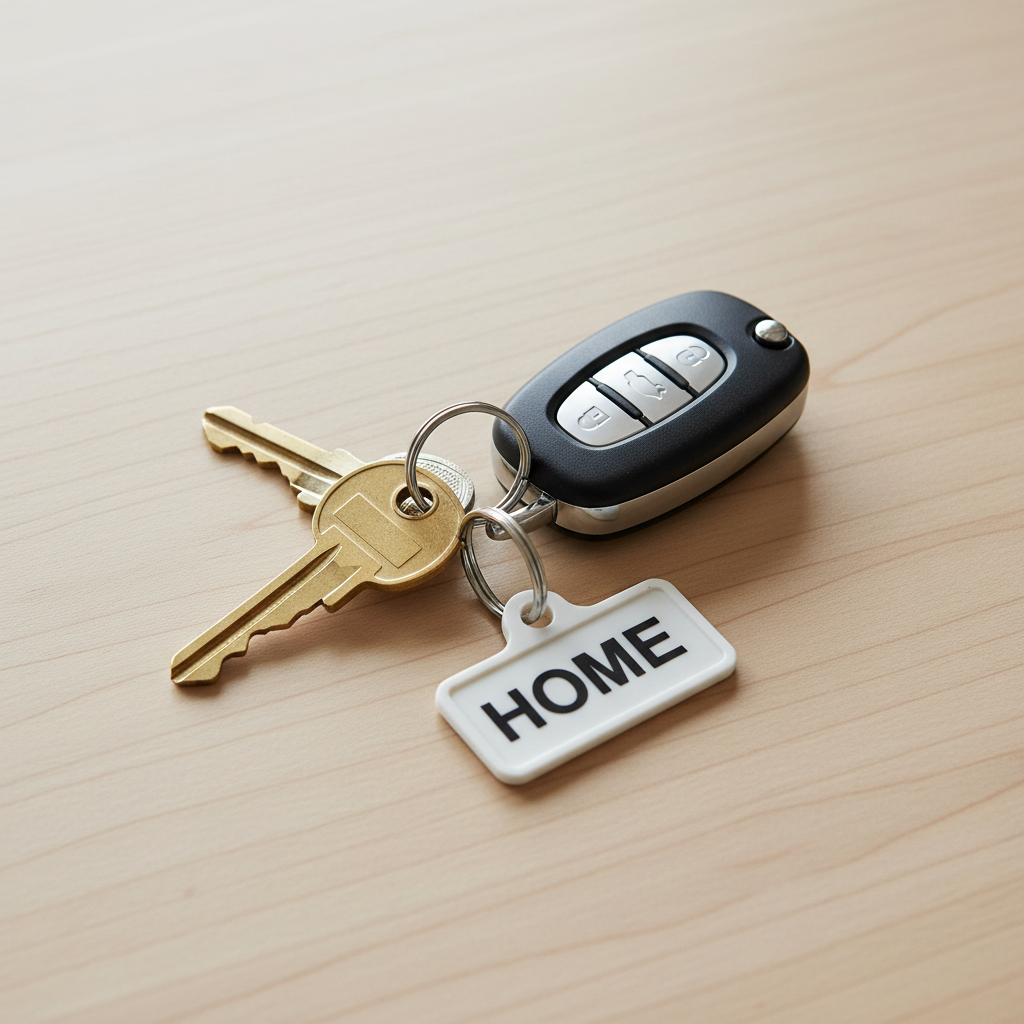
Why keychains get messy (and why it matters)
Most “messy keychain” problems aren’t about being disorganized, they’re about friction. You add one key, one fob, one gym tag, and suddenly everything spins and stacks in the worst way.
- Bulk creep: extra keys and tools accumulate because removing them feels risky.
- Bad connectors: tiny split rings and cheap clips twist items into a knot, especially with a large car fob.
- Noise and wear: keys clack, finishes chip, and a heavy fob can stress the ignition or start button area when it swings.
- Slow access: you fumble at the door or trunk because everything looks and feels the same.
Also worth saying out loud: people often “solve” this by buying a big organizer but keeping every item, which usually trades one problem for another.
Quick self-check: what kind of keychain problem do you have?
Pick the closest match. Your solution should match your pain point, not a trend you saw online.
- Pocket discomfort: sharp edges, long stacks, or a fob that sits sideways.
- Too loud: clanking in your bag, car cupholder, or while walking.
- Hard to find the right key: multiple similar keys, no labels, everything on one ring.
- Too many “maybe” items: old keys, spare mailbox keys, tags you rarely use.
- Tech-heavy: car fob + remote start + tile tracker + USB, all competing for space.
If you’re not sure, dump everything on a table and do a 10-second test: if you can’t identify each item’s purpose instantly, your keychain is carrying history, not utility.

Step 1: Do a “carry audit” before you buy anything
Before you shop for a new ring or organizer, decide what deserves to live with your car keys. This is where most people save the most space.
Use the Keep / Move / Remove method
- Keep: car fob, the key you use daily, and anything required for access every day (parking gate, apartment fob).
- Move: spares, office keys you only need some days, gym tags, rarely used padlock keys.
- Remove: mystery keys, expired tags, duplicates you forgot you had.
For “Move” items, a small spare-key kit at home or a second ring in your bag often beats forcing everything onto one chain.
Safety note for spares
If you plan to keep a spare car key or fob in the vehicle, think twice. According to NICB (National Insurance Crime Bureau), vehicle theft prevention often includes avoiding leaving keys in or near the car, since convenience can increase risk in many situations.
Step 2: Choose a keychain structure that fits your routine
There isn’t one “best” layout. The goal is a structure that makes your most-used items easy to grab, while keeping the rest from swinging, scraping, or stacking.
Three setups that work in real life
- Minimal ring + quick-release: best for people who often hand keys to someone else (valet, mechanic, family).
- Two-ring system: one ring for the car fob and daily keys, another ring for secondary keys you can detach.
- Key organizer (folding/key stack): good for reducing clank and sharp edges, but only if your keys are standard flat keys and not oversized.
If you’ve ever had your fob yank the rest of your keys when you try to unlock a door, you’re a strong candidate for a quick-release connector.
Step 3: Pick hardware that reduces bulk, noise, and scratches
The hardware matters more than most people expect. A strong connector can keep the keychain stable, and a weak one can turn organization into constant maintenance.
What to look for (practical, not fancy)
- Quick-release clip: lets you detach the car fob without disassembling the whole chain.
- Flat split ring: tends to sit better than thick round rings when combined with a large fob.
- Small “buffer” spacer: a short strap or small connector between fob and keys can stop metal-on-metal scraping.
- Label or color cue: one key tag can eliminate the daily “which one is it” moment.
Many people add a tracker right away, but if your ring is overloaded, the tracker becomes one more thing that flips to the front and annoys you. Organize first, then add extras.
Recommended layouts (with a simple comparison table)
Use this as a fast decision tool. The “best” option is the one you’ll actually keep using after a busy week.
| Layout | Best for | Pros | Trade-offs |
|---|---|---|---|
| Minimal ring + quick-release | Valet/mechanic handoff, shared cars | Fast detach, less tangling | Clip adds a little length |
| Two-ring system (daily + secondary) | People who carry “sometimes” keys | Flexible, easy to slim down | Can forget the secondary ring |
| Key organizer (stacked keys) | Pocket carry, noise reduction | Quiet, no sharp key edges | Not ideal for thick keys/fobs |
| Car fob separate + single house key | Smart locks, minimalists | Very light, low scratch risk | Requires alternative access plan |
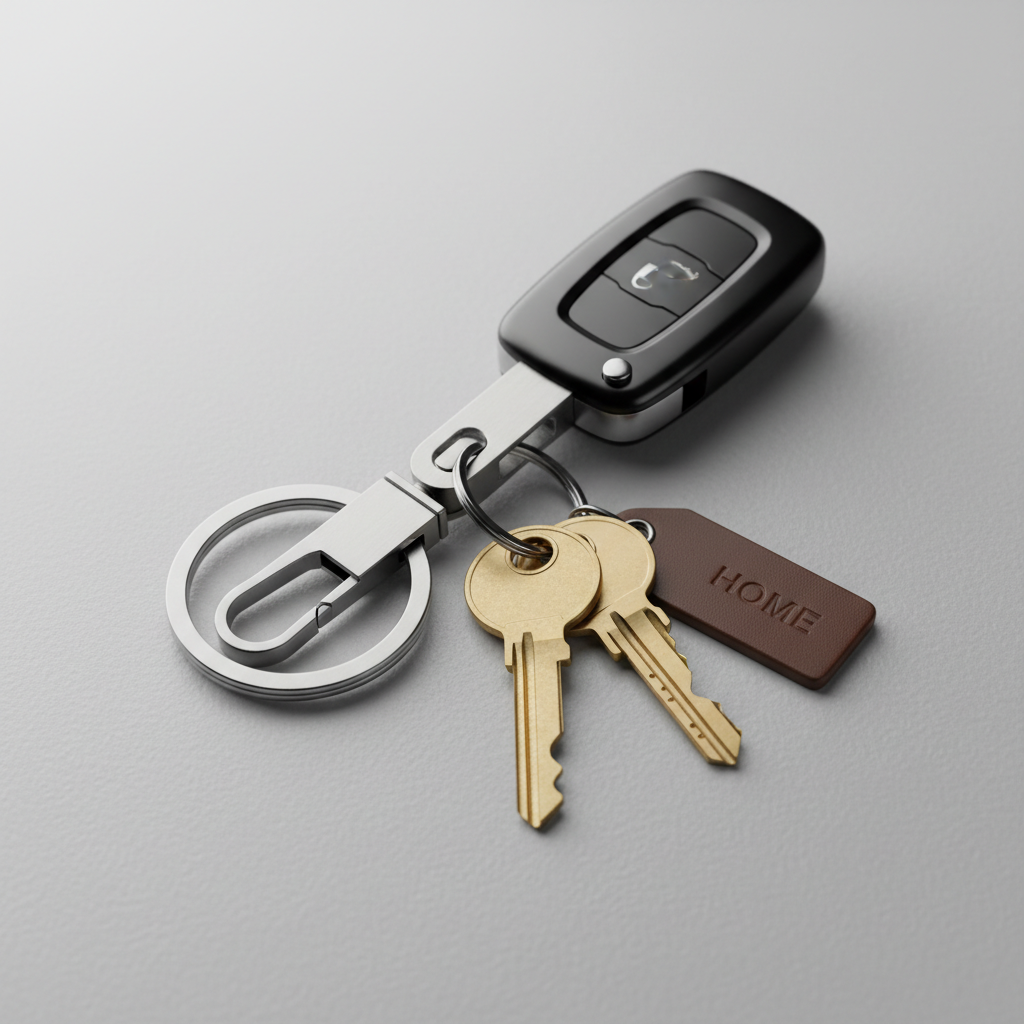
Hands-on: a 10-minute setup you can copy
If you want a reliable baseline, this is the simplest setup that works for most drivers without overthinking it.
What you need
- 1 sturdy main ring for daily items
- 1 quick-release (or small carabiner-style clip) for the car fob
- 1 small secondary ring for rarely used keys
- Optional: one labeled key tag
Steps
- Put your car fob on the quick-release, so it can detach cleanly when needed.
- On the main ring, keep only the keys you use weekly (home, mailbox, essential access).
- Move “sometimes” keys to the secondary ring, and keep it in a consistent place (bag pocket, drawer, glove box only if risk feels acceptable in your situation).
- Add one label if you have similar-looking keys, and keep the label small so it doesn’t become the new bulk.
When people ask how to organize car keys on key chain for comfort, this is usually the first setup that feels better immediately, because it removes the spinning “ball” effect.
Common mistakes that make key organization worse
A few choices look tidy on day one, then become annoying fast.
- Over-accessorizing: bottle opener, mini flashlight, multitool, plus a big fob often turns into a pocket brick.
- One giant ring for everything: easy to build, hard to live with.
- Ignoring scratch points: metal keys rub your phone screen protector, or gouge leather bags.
- Too many novelty clips: weak springs fail, and you end up losing something small but important.
If you want quieter carry, a soft key sleeve or a compact organizer can help, but only after you slim the set. Otherwise you just wrap a mess.
When it makes sense to get professional help (or at least ask)
If your situation involves security or access control, it can be worth getting advice rather than guessing.
- Workplace keys: if you carry restricted keys or badges, ask your facilities or security team about approved attachments and separation rules.
- Building fobs and access cards: some systems can be sensitive to bending or metal interference, so keep cards separate if they act up.
- Car key issues: if your fob feels unreliable, a dealership or qualified locksmith can help diagnose battery/contact problems; avoid DIY fixes that could damage seals.
According to NHTSA, safe vehicle operation includes reducing distractions; if your keys or accessories regularly snag, fall into footwells, or distract you while driving, consider simplifying the setup and stowing it consistently.
Key takeaways you can use today
- Organize by frequency, not by “maybe I’ll need it.”
- Separate the car fob with a quick-release to reduce bulk and tangling.
- Two rings beat one when you have secondary keys.
- Label one confusing key and stop guessing at the door.
If you’ve tried a few gadgets and nothing sticks, go back to the carry audit. In many cases, that’s the real answer to how to organize car keys on key chain without turning it into a hobby.
Pick one layout from the table, set a 10-minute timer, and commit to a one-week test. If you still hate it after seven days, you’ll at least know what to change next, instead of buying another random clip.