
How to fix lower back pain in car usually comes down to three things you can control right now: seat setup, how long you stay still, and how you use your core while driving.
If you drive for work, commute daily, or sit in traffic a lot, low back pain can creep in even when you feel “fine” at the start of the trip, then you step out of the car and your back tightens up. That pattern is common because car seats lock you into one position, and small posture errors get amplified over time.
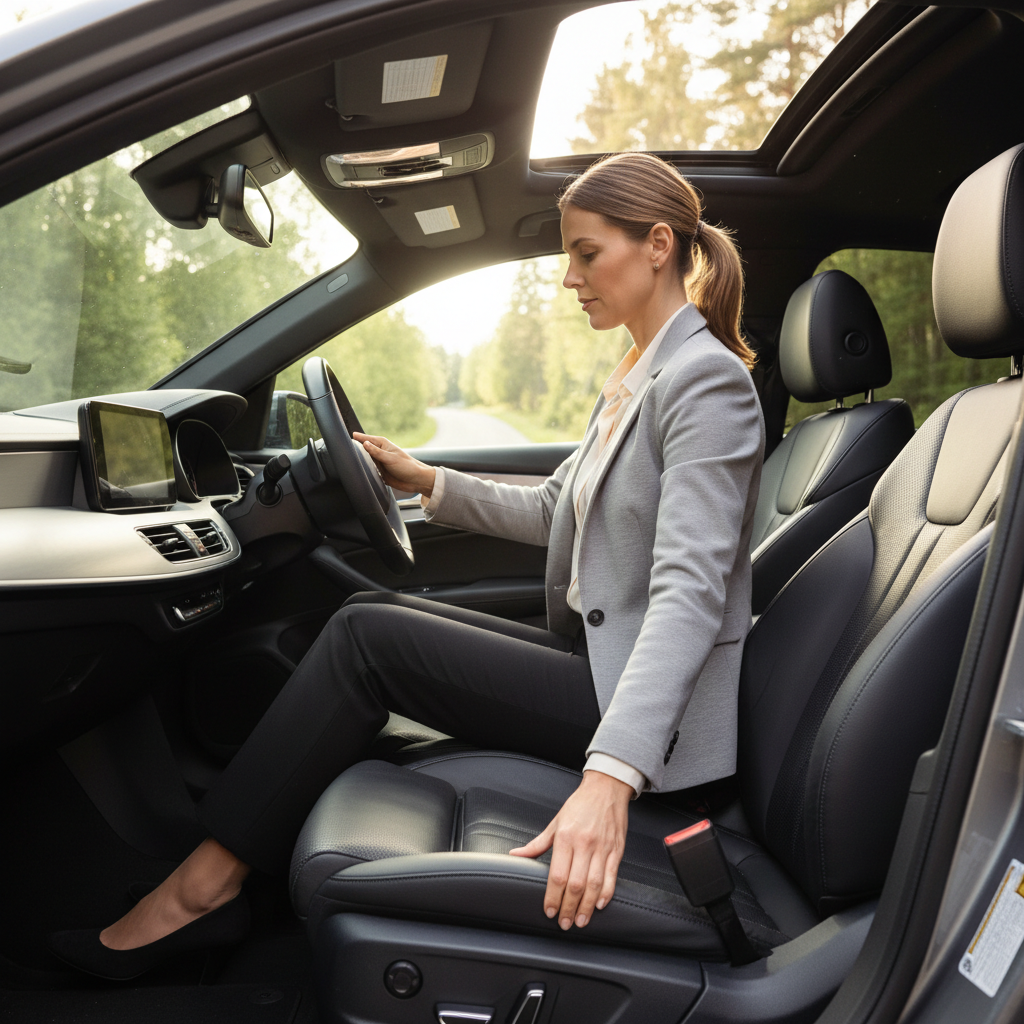
Also, not all “car back pain” is the same. Some people feel a dull ache from slumping, others get sharp pain after bumps, and some notice radiating symptoms into the glute or leg. This guide helps you sort which bucket you’re in, make fast adjustments, and know when it’s time to talk with a clinician.
Why your lower back hurts in the car (what’s really going on)
Most cars encourage a slightly flexed spine posture, meaning your low back rounds and your pelvis tucks under. That reduces the natural curve in your lumbar spine, and for many people it increases sensitivity in the joints, discs, or surrounding muscles.
- Seat pan pressure: If the seat is too long or too tilted, it can push the pelvis backward and flatten your low back curve.
- Reach and tension: If the wheel is far away, you reach, shoulders creep up, and your trunk muscles brace for long periods.
- Vibration + micro-bumps: Road vibration can irritate already-sensitive tissues, especially on longer drives.
- Static time: Staying still reduces blood flow and makes tissues feel “stuck” when you finally stand.
According to the National Institute of Neurological Disorders and Stroke (NINDS)..., low back pain has many possible causes and often involves muscles, joints, discs, or nerves, which is why the “one stretch fixes all” approach tends to disappoint.
Quick self-check: which driving pain pattern fits you?
Use this as a simple filter before you start changing everything. You’re looking for the most likely driver, not a perfect diagnosis.
- Dull ache that builds slowly and eases when you walk for a minute: often posture + stiffness.
- Pain spikes with bumps/potholes or feels “jarring”: often irritation and poor shock absorption from seat position.
- Pain on one side with wallet/phone in back pocket: often pelvic tilt and asymmetry.
- Numbness/tingling down the leg or into the foot: could involve nerve irritation, consider professional guidance.
- Morning is rough, sitting is worse, standing helps: many people benefit from lumbar support and more frequent breaks.
If you’re unsure, treat it like a posture-and-breaks problem first for a week. If symptoms escalate or radiate, skip the “wait and see” strategy and get checked.
Fix your seat setup in 2 minutes (the high-impact changes)
How to fix lower back pain in car often starts with seat geometry. Small changes matter more than expensive accessories, especially if you drive the same vehicle daily.
1) Set distance to the pedals
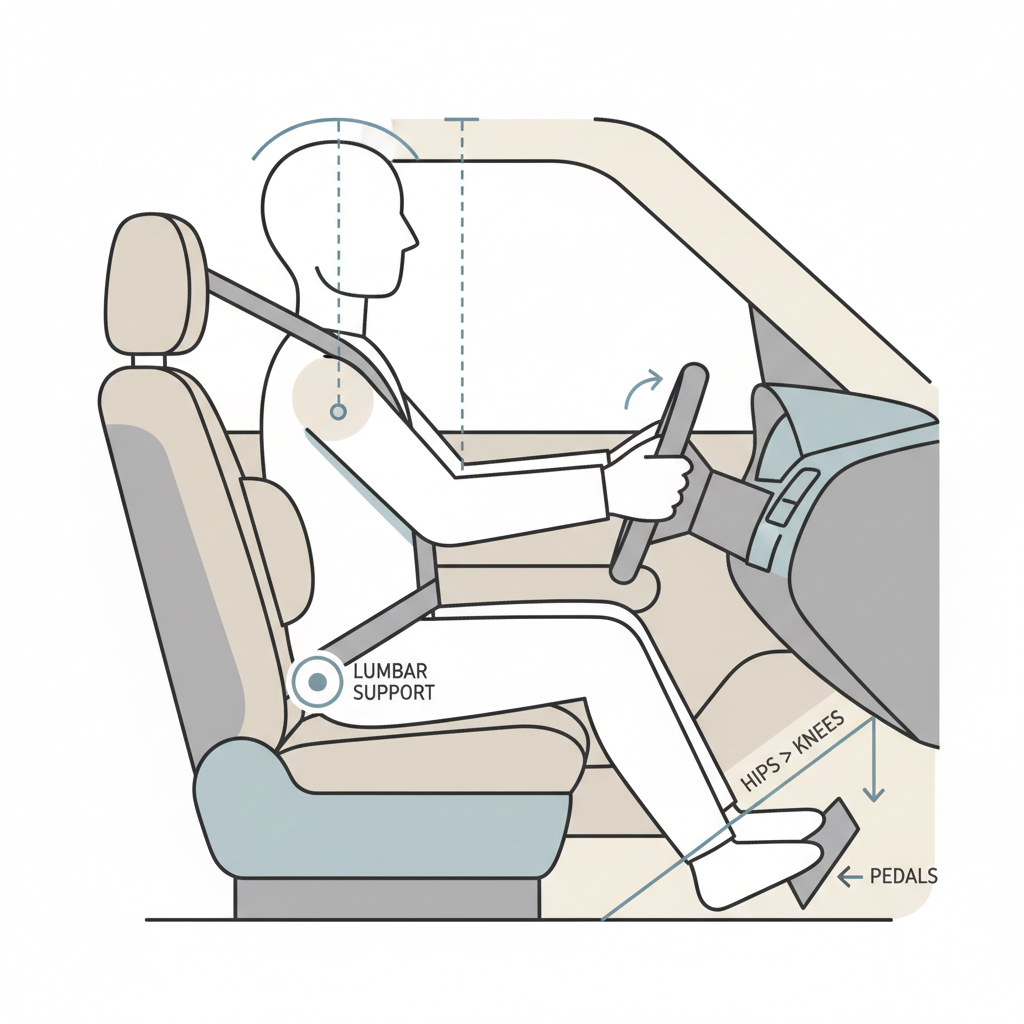
Slide the seat so your knees stay slightly bent with your foot on the brake. If you have to reach with your toe, your pelvis tends to roll back and your low back rounds.
2) Adjust seat height and tilt
Aim for hips level with, or slightly higher than, your knees. If the front of the seat is high and digs into your thighs, it can tilt your pelvis backward. If it’s too low, your spine often collapses into a “C” shape.
3) Recline less than you think
A mild recline is fine, but if you’re too laid back, you’ll reach forward to the wheel and hold tension. Many people feel better around a modest angle where your shoulders rest comfortably without sliding forward.
4) Bring the wheel to you
If your steering wheel telescopes, pull it toward you so elbows stay slightly bent and shoulders stay down. Reaching is a quiet back-pain trigger.
5) Add lumbar support the right way
If the seat has lumbar support, use it to fill the small curve of your low back, not to push you forward aggressively. If it doesn’t, a small rolled towel or compact lumbar cushion can help.
- Placement tip: put support at belt-line height, then fine-tune up/down by an inch until your spine feels “stacked,” not arched hard.
Common car-seat tweaks (what to try, and when it helps)
Here’s a practical table to match a symptom to a likely tweak. Treat this as a starting point; bodies vary, and comfort matters.
| What you feel in the car | What to adjust | What “good” feels like |
|---|---|---|
| Low back ache after 20–40 minutes | Add mild lumbar support, reduce slumping, move wheel closer | Less bracing, ribs stacked over pelvis |
| Pinchy feeling at belt line | Slightly recline less, raise seat a bit, soften lumbar pressure | Pressure spreads out, not one sharp spot |
| One-sided pain | Remove wallet/phone from back pocket, center your hips, check mirror alignment | Hips feel even, no twist |
| Pain with bumps | Increase seat height slightly, ensure you’re not over-reaching, consider a vibration-damping cushion | Less jolt through spine |
| Tight hips/glutes getting out of car | Breaks every 45–60 minutes, quick hip flexor/glute moves | Standing feels smooth within 30–60 seconds |
In-the-car micro-moves (safe, subtle, and actually doable)
You can’t do a full mobility session at 70 mph, and you shouldn’t try. But you can reduce stiffness with small resets that don’t distract you.
- Breathing reset (30 seconds at a stop): inhale gently through the nose, exhale longer than you inhale, let shoulders drop. Many people unknowingly hold their breath in traffic.
- Pelvic “find neutral”: tiny rock forward/back until you find the midpoint where low back feels supported, then hold that.
- Glute squeeze: lightly squeeze both glutes for 3 seconds, relax for 6 seconds, repeat 5 times. It wakes up support muscles without twisting.
- Chin tuck: slide head back slightly as if making a double chin, keep eyes forward. Neck posture influences upper back tension, which often spills into the low back.
Key point: if any move increases sharp pain or causes symptoms down the leg, stop and reassess. Pain that travels can be a different category.
Breaks, stretches, and a 5-minute routine for gas stations
How to fix lower back pain in car is often less about one perfect position and more about breaking up static time. For many adults, 45–60 minutes is the point where stiffness starts winning.
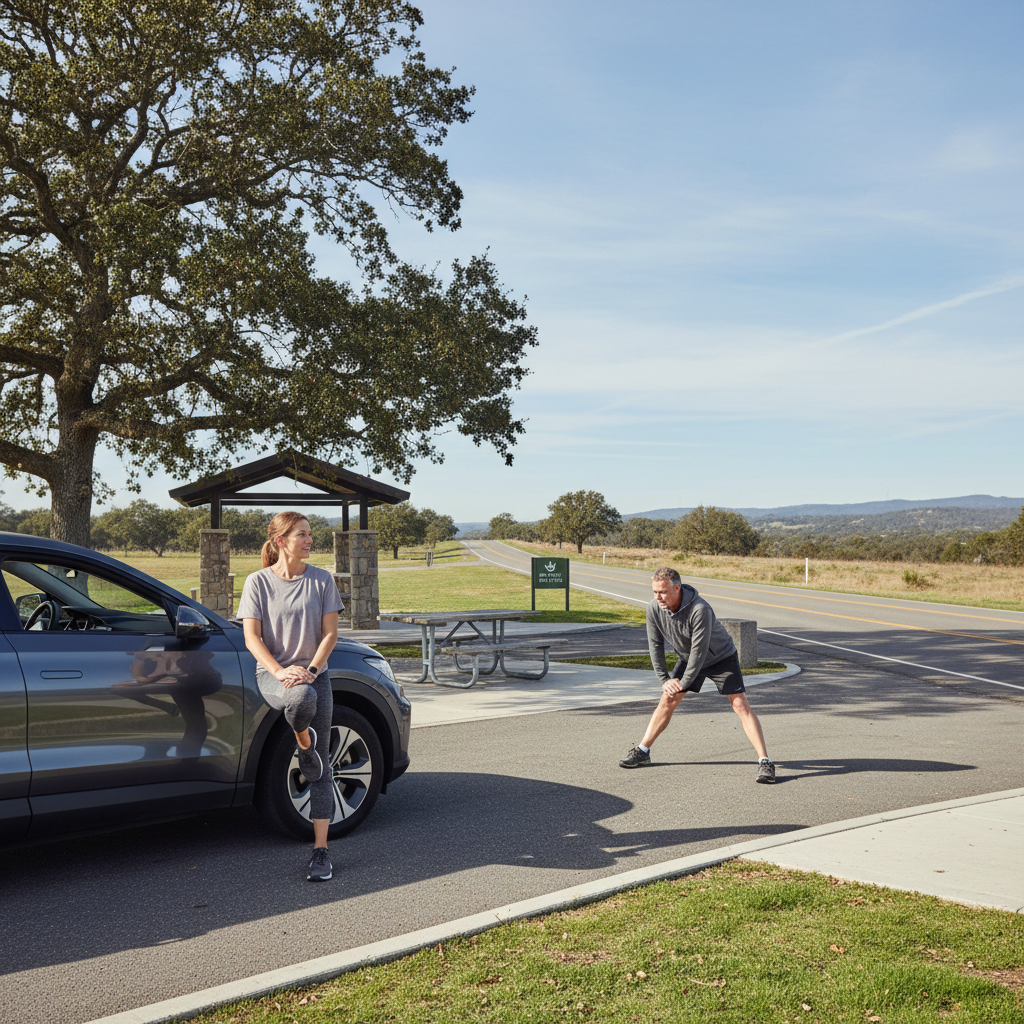
Try this quick routine during a stop, keeping it comfortable rather than intense:
- Walking loop (1 minute): brisk walk to get blood moving.
- Hip flexor stretch (60 seconds each side): gentle lunge stance, squeeze glute on the back leg side.
- Glute stretch (30–45 seconds each side): figure-4 against the car seat or standing version if balance feels steady.
- Hip hinge (8 reps): hands on thighs, push hips back with a flat-ish back, then stand tall. This often reduces the “stuck” feeling.
If you’re prone to dizziness, balance issues, or recent injury, keep it simpler and consider asking a professional for a personalized routine.
Mistakes that keep the pain coming back
These are the traps I see most often when people try to solve driving-related back pain quickly.
- Overstuffing lumbar support: too much arch can irritate joints and make you slide forward.
- Reclining a lot to “relax”: it feels comfy for 5 minutes, then you start reaching and bracing.
- Stretching only the low back: hips and glutes usually deserve equal attention, especially after long sitting.
- Ignoring asymmetry: wallet, uneven seat wear, one arm always on the window ledge, it adds up.
- Buying gadgets before fixing posture: cushions help, but they can’t compensate for poor reach and poor pedal distance.
When to get medical or professional help
Most driving-related low back pain improves with better setup and movement breaks, but some situations deserve a faster conversation with a clinician.
- Pain with numbness, tingling, or weakness in the leg or foot
- Symptoms that worsen week to week despite seat changes and breaks
- New pain after a crash or significant fall
- Changes in bladder/bowel control or saddle numbness, which can be urgent
According to the Centers for Disease Control and Prevention (CDC)..., back pain is common and can have many causes, so getting evaluated is reasonable when symptoms change, persist, or limit daily function.
Practical wrap-up: your next drive, made easier
How to fix lower back pain in car rarely requires a dramatic overhaul. Start with seat distance, bring the wheel closer, add mild lumbar support, then earn relief with short breaks that keep hips from locking up.
If you want a simple plan, do this on your next trip: adjust pedals and wheel before you start, set a reminder to stop within an hour, and do the 5-minute routine once. If that helps even a little, you’ve found a direction that’s worth refining.
FAQ
- How do I stop lower back pain while driving long distance?
Dial in seat distance and lumbar support, then schedule breaks before pain shows up. Many people do better with shorter, planned stops than waiting until stiffness hits. - What is the best seat position for lower back pain in a car?
A position with hips level or slightly higher than knees, a mild recline, and the wheel close enough that elbows stay bent. “Best” varies, but reaching forward is usually a bad sign. - Is a lumbar cushion worth it for car back pain?
Often yes, especially if your seat lacks support, but size matters. A small, firm roll usually works better than a thick pillow that forces an aggressive arch. - Why does my back hurt more in the passenger seat?
Passengers often slump more, twist to talk, or nap with the spine rotated. Try the same setup rules and keep both feet supported rather than tucking one leg. - Can sciatica get worse from driving?
It can in some cases, since prolonged sitting may irritate nerve-related symptoms. If pain radiates below the knee or includes numbness, consider professional evaluation. - How often should I stop to avoid back pain on a road trip?
A common target is every 45–60 minutes for a short walk, then adjust based on your symptoms and schedule. Even 2–3 minutes helps more than people expect. - Should I stretch before or after a drive?
If you’re stiff, light mobility before helps; if you’re sore after, do gentle hip and glute work during a stop. Avoid pushing into sharp pain either way.
If you’re currently dealing with recurring discomfort and want a more “set it and forget it” approach, consider having a physical therapist or qualified clinician review your driving posture and a short strengthening plan, it’s often more efficient than cycling through random cushions and stretches.