
Best car travel pillow for neck support driving usually means one thing in real life: you want your neck to feel stable on long drives without the pillow pushing your head forward, fighting the seat, or getting in the way of the seat belt.
Here’s the tricky part, a “great” pillow in an airplane can be mediocre in a car. Your headrest, seat angle, and the fact you might be driving (not just resting) changes what “support” should look like.
This guide helps you choose a pillow by your role (driver vs passenger), your car setup, and your neck’s usual complaint, then shows how to test fit at home so you don’t gamble on comfort.
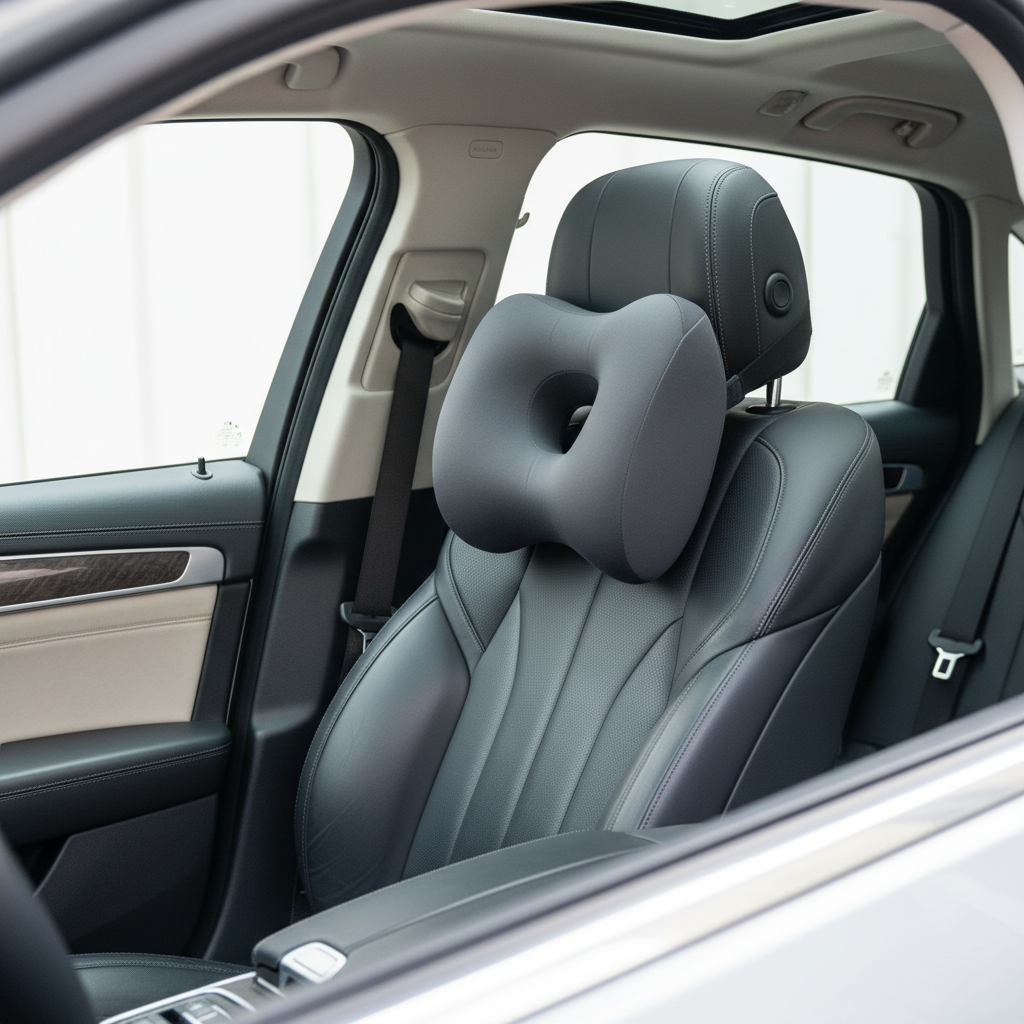
What “neck support” should mean in a car (and what it shouldn’t)
In a car, good neck support is mostly about reducing side-to-side wobble and keeping your head in a neutral position. If the pillow forces your chin toward your chest, comfort might feel nice for five minutes, then your upper back and jaw often complain later.
For passengers, support can be a bit more “sleep-friendly.” For drivers, it should stay subtle and never distract from posture, mirrors, or shoulder checks.
- Good sign: your head feels steadier, and you don’t tense your shoulders to “hold yourself up.”
- Bad sign: your chin drops, your head gets pushed forward, or you feel pressure at the throat/jaw.
- Non-negotiable: nothing should interfere with the seat belt path or safe seating position.
Quick comparison table: common car travel pillow types
Most shoppers get stuck because every option says “ergonomic.” This table is a faster way to map styles to real situations, especially if you’re trying to find the best car travel pillow for neck support driving without buying three and returning two.
| Type | Best for | What to watch out for |
|---|---|---|
| U-shaped (classic) | Passengers who lean forward or to the side | Often pushes head forward in cars with aggressive headrests |
| Wraparound / chin-support | Passengers who nod forward while sleeping | Can feel warm or restrictive, not ideal for drivers |
| Side-support (winged) | Passengers who slump toward window/door | Bulky, may not fit narrow headrests or high bolsters |
| Headrest strap pillow | Kids/teens, back seat naps, consistent positioning | Needs correct strap height, may not suit all headrests |
| Lumbar-first approach (small neck pillow + lumbar) | Drivers with neck tension triggered by posture | Takes setup time, requires honest posture check |
Why neck pain happens on drives (it’s not always the pillow)
People blame the pillow, but the cause is often the whole chain: pelvis position, mid-back support, headrest angle, and how long you hold one posture.
- Headrest geometry: many modern cars have forward-leaning headrests. Add a thick pillow and your head gets pushed even more forward.
- Seat recline mismatch: too upright or too reclined can overload the neck. A small adjustment sometimes beats a new product.
- “One-side” habits: always leaning to one side (door armrest, window, center console) can create a predictable sore spot.
- Stress grip: drivers often tighten shoulders and jaw without noticing, then the neck takes the hit.
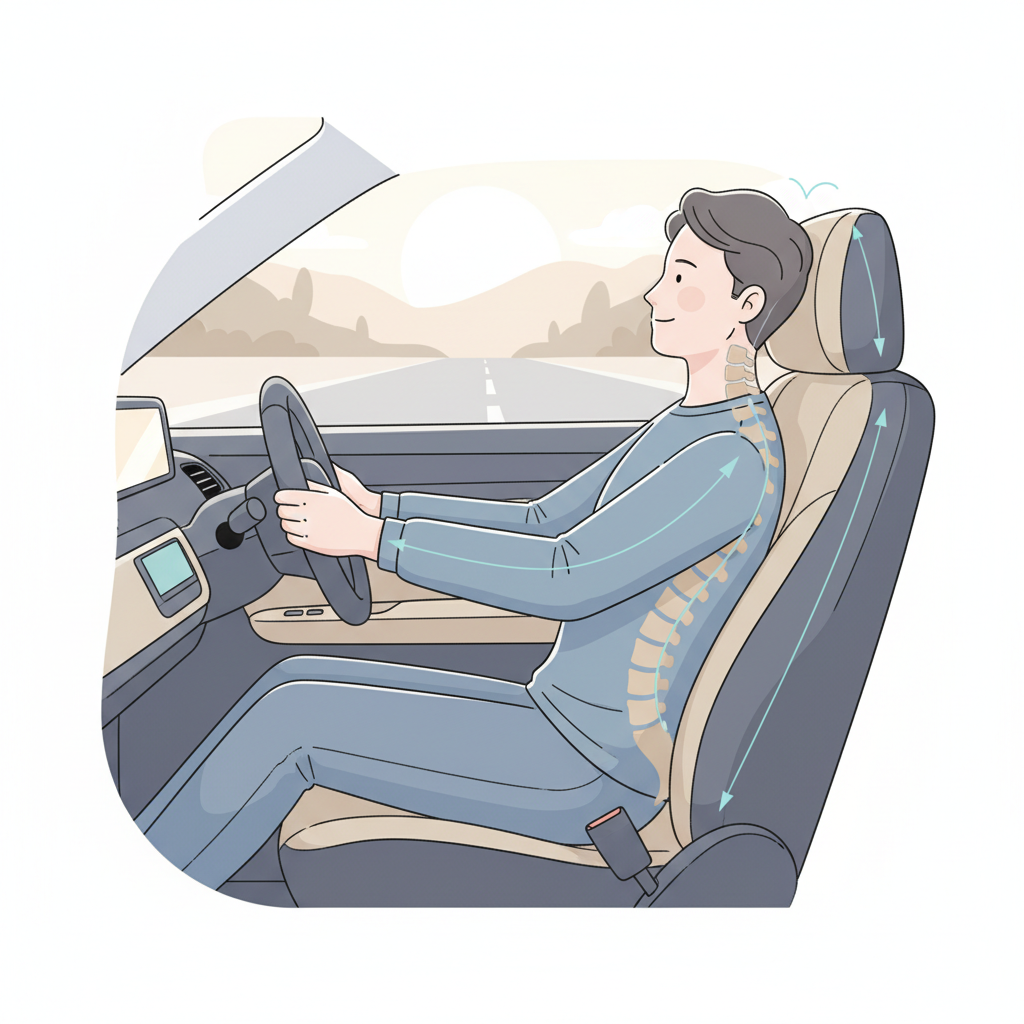
Self-check: what you need before you shop
Do this in your driveway for two minutes. You’ll narrow the field fast.
- Role: Are you the driver, front passenger, or back-seat sleeper?
- Head movement: Do you nod forward, tip sideways, or feel like your head “hangs” backward?
- Headrest: Does it already touch your head, or is there a gap?
- Heat tolerance: Do you overheat easily? If yes, skip thick memory foam wraps.
- Neck sensitivity: Any history of injury, numbness, tingling, dizziness? If yes, be conservative and consider professional guidance.
Fast rule: if your headrest is already forward, prioritize thin, supportive shapes over plush ones.
How to choose the best option by scenario
1) If you’re driving and want “support,” not sleep
For drivers, the best car travel pillow for neck support driving is often not a big U-shaped pillow. A thinner neck roll or a compact cushion that fills a small gap can help you stay neutral without pushing your head forward.
- Look for: low-profile support, grippy cover, stable placement.
- Avoid: bulky wraps that change head position or reduce awareness.
- Try first: adjust seat distance and lumbar support, then add minimal neck support if you still feel strain.
2) If you’re a passenger who nods forward
This is where wraparound and chin-support styles can shine, as long as they don’t feel restrictive. If you wake up with a sore jaw, the support is probably too high or too firm.
- Look for: adjustable closure, soft edge at the chin, breathable fabric.
- Quick fit test: sit back, relax, let your head drop naturally, the pillow should “catch” you gently.
3) If you lean toward the door/window
Side-support pillows (winged) can reduce the head “snap” that happens when you drift off. They work best in the back seat or as a passenger, not as a driver add-on.
- Look for: stable side bolsters, not-too-wide wings, easy cleaning.
- Watch: some designs push your head inward too aggressively, creating a stiff neck on the other side.
4) If the real problem is posture (common for long drives)
Many people buy a neck pillow when what they needed was lumbar support. If your mid-back rounds, your neck extends forward to compensate, then you chase “neck support” forever.
- Try: add a small lumbar cushion first, then reassess neck comfort.
- Combine: lumbar + thin neck roll often feels more natural than one big pillow.
Setup steps: make a pillow work with your headrest (not against it)
Even a good pillow fails if it sits too low or too thick. Set it up like you’re fitting gear, not decorating a seat.
- Step 1: Sit normally, then bring your head back to the headrest without lifting your chin.
- Step 2: Place the pillow to fill the gap at the base of your skull and upper neck, not mid-neck.
- Step 3: Check that your shoulders stay relaxed. If they creep up, the pillow is too thick or too high.
- Step 4: Do a 10-minute test ride as a passenger first, then reassess for longer trips.
According to the National Highway Traffic Safety Administration (NHTSA), head restraints help reduce whiplash risk in rear-end crashes, so avoid setups that move your head far forward or leave you far from the headrest without good reason.
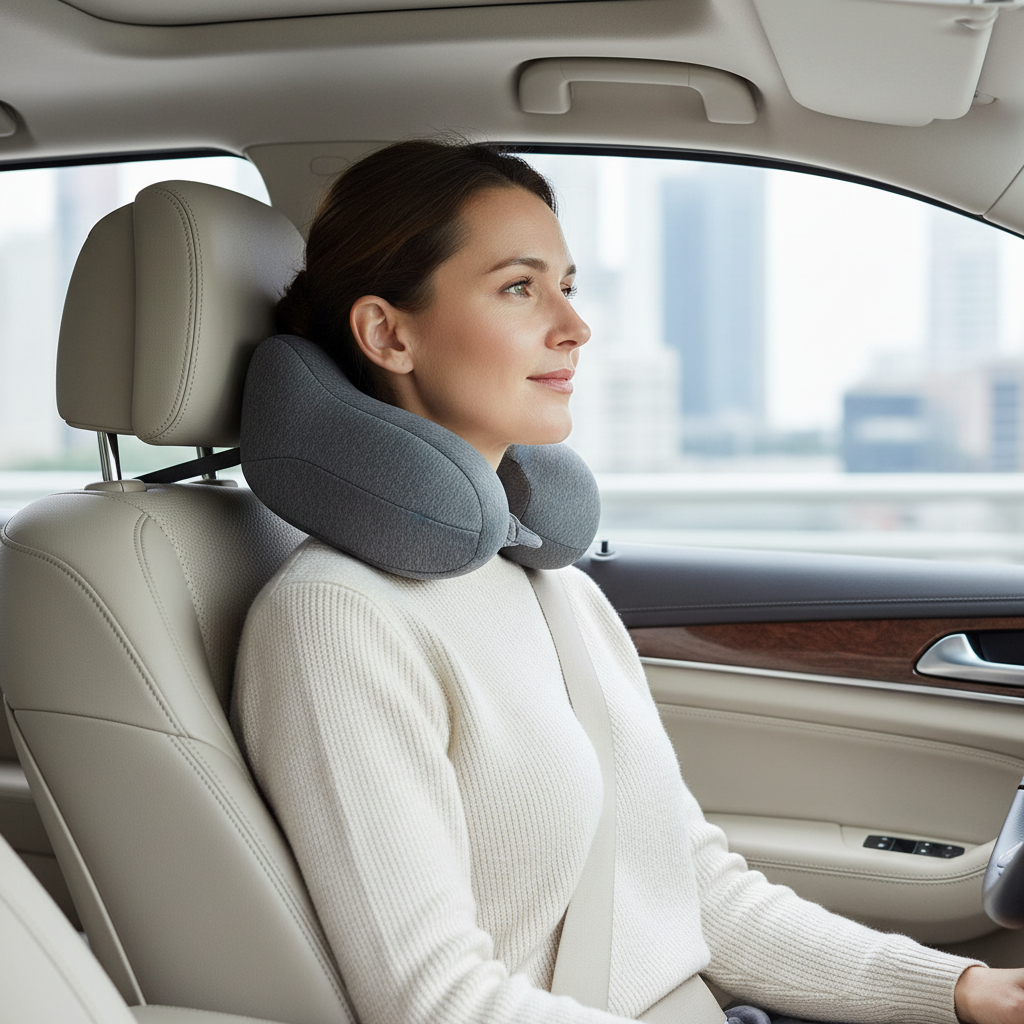
Common mistakes that waste money (and comfort)
- Buying “plush” for a car: thick memory foam feels luxurious in hand, then changes your head position in the seat.
- Ignoring the headrest angle: if the headrest leans forward, choose a slimmer pillow or none at all.
- Using a driver sleep-style pillow: if it encourages nodding, it’s the wrong tool for driving.
- Forgetting temperature: overheating makes people fidget, fidgeting defeats support.
- Wrong height: too low supports your shoulders, not your neck, too high jams the jawline.
If you try one thing this week, try this: keep the pillow thinner than you think you need, and let the headrest do its job.
When to consider professional help (or at least a cautious approach)
If you feel numbness, tingling down the arm, new headaches, dizziness, or pain that worsens after each trip, it may be more than “needs a better pillow.” In many cases it’s smart to consult a medical professional or a physical therapist for personalized guidance, especially if you have a prior neck injury.
Also, if you’re trying to solve driver fatigue or sleepiness with a pillow, pause and rethink the plan. Comfort matters, but it can’t replace safe rest breaks.
Key takeaways (so you can decide fast)
- Drivers: prioritize low-profile support and posture, not sleep-oriented designs.
- Passengers: match the pillow to your drift pattern, forward nod vs side lean.
- Fit beats hype: headrest angle and pillow thickness matter more than brand claims.
- Test at home: a 10-minute trial tells you more than reviews alone.
Conclusion: picking the right pillow without overthinking it
The best purchases here tend to be boring: a pillow that fits your seat, supports without forcing posture, and stays comfortable past the first few miles. If you’re driving, start by fixing the seat setup and go minimal on neck padding, if you’re a passenger, choose the shape that matches how you actually fall asleep.
If you want a simple next step, do the self-check above, then pick one style to test and commit to a short trial run before your next road trip.
FAQ
- What is the best car travel pillow for neck support driving if my headrest pushes forward?
Usually a thinner neck roll or low-profile cushion works better than a thick U-shaped pillow, because it’s less likely to push your head even farther forward. - Is a neck pillow safe to use while driving?
It depends on design and fit. For drivers, keep it minimal and make sure it doesn’t restrict movement or change your normal seating position. If in doubt, skip it while driving and use it as a passenger. - Why does a travel pillow make my neck hurt more in the car?
Commonly it’s positioned too high or it forces chin-down posture. Another frequent issue is that your headrest already sits forward, so added thickness creates strain. - Should I buy memory foam or inflatable for road trips?
Memory foam feels stable but can run warm and bulky. Inflatable is easier to fine-tune thickness, but it can feel bouncy. Your tolerance for heat and firmness usually decides this. - How do I stop my head from falling sideways as a passenger?
Side-support (winged) styles or a headrest strap pillow often helps, especially in the back seat. Make sure it supports gently rather than forcing your head into a turned position. - Can a lumbar pillow reduce neck pain on long drives?
Often yes. If your lower back lacks support, your upper body compensates and the neck works overtime. A small lumbar cushion plus a thin neck roll can feel more natural than one big neck pillow. - How long should I test a pillow before deciding?
A short 10–20 minute drive is a good start, then reassess on a longer trip. If discomfort shows up quickly, it usually won’t improve with time.
If you’re trying to find a more “set-and-forget” setup for long drives, it can help to choose a pillow style that matches your seat and your drift pattern, then pair it with a quick posture check so you’re not chasing comfort mile after mile.