
Best car door lock lubricant choices come down to one thing: solving sticking, squeaking, or freezing without attracting dirt or damaging plastic and rubber around the lock.
If your key starts feeling gritty, your power lock sounds strained, or the door needs a second pull to latch, lubrication can help, but the “wrong” product often makes things worse by turning dust into sludge. That’s why picking the right type matters more than chasing a brand name.
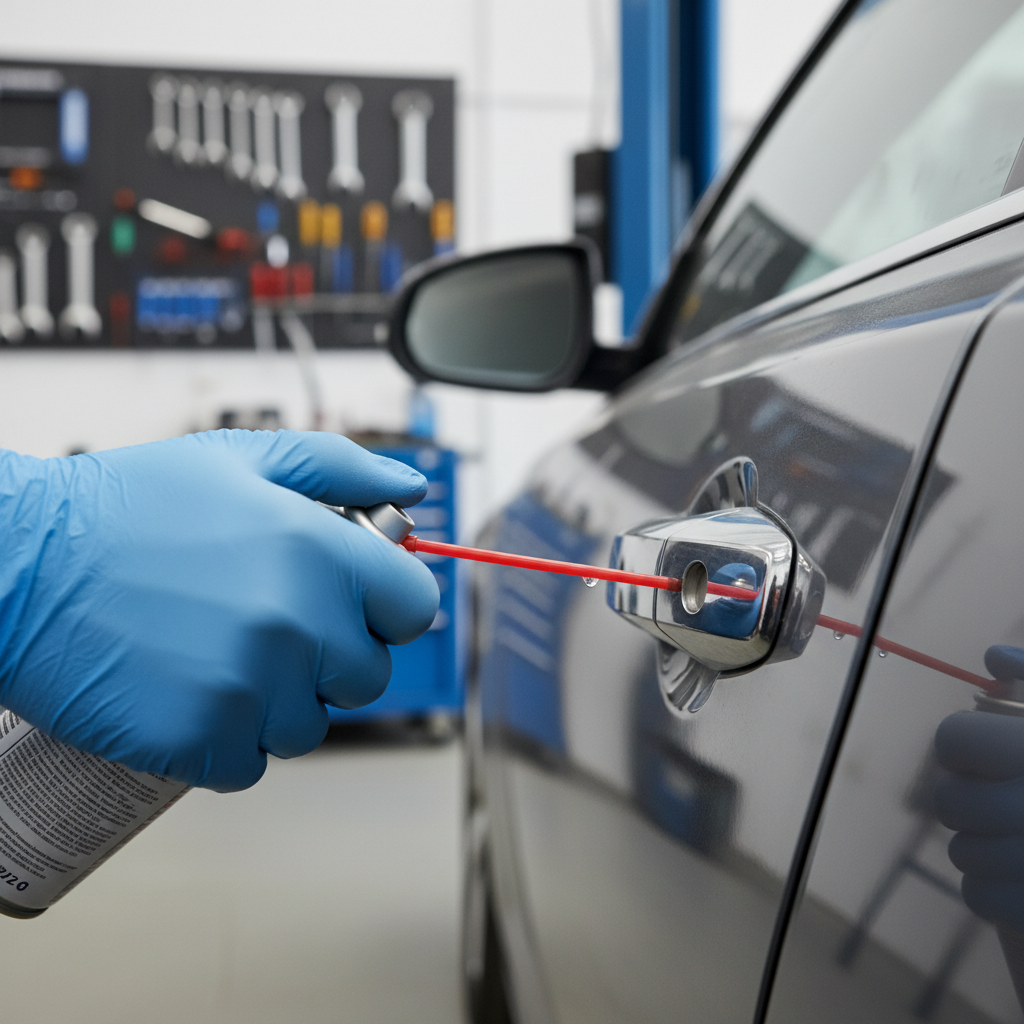
This guide focuses on real-world use in the U.S., including winter freeze-ups, dusty commutes, and older vehicles where wear shows up fast. You’ll get a quick decision checklist, a comparison table, and step-by-step application tips that keep mess to a minimum.
What makes a car door lock stick in the first place
Most “bad lock” complaints aren’t a broken lock, they’re friction and contamination. A few common triggers show up again and again.
- Dirt and road grit inside the keyway or latch area, especially if the car lives outdoors.
- Old petroleum residue from oils or heavy sprays that thicken over time and trap dust.
- Moisture + cold causing the cylinder or latch to ice up, common in northern states.
- Wear and slight misalignment in older doors, where the latch works harder and “feels” dry.
- Dry linkages inside the door, more noticeable when power locks sound slow or strained.
According to NHTSA, if a door latch doesn’t close or stay closed, it can create a safety risk. Lubrication helps when friction is the issue, but persistent latch problems can require inspection or repair.
Quick checklist: Which lubricant type fits your problem?
Before you buy anything, match the product to the symptom. This avoids the classic mistake: spraying something “slick” and ending up with a gummy lock two months later.
- Key won’t insert smoothly or feels gritty: dry graphite or a lock-specific dry film often works better than wet oils.
- Lock freezes in winter: use a lock de-icer for the moment, then a dry film lubricant to reduce moisture binding.
- Squeak or stiffness when closing the door: the latch and hinges usually want a synthetic grease, not graphite.
- Power lock sounds slow: treat the latch mechanism and linkages inside the door with a plastic-safe dry film or light synthetic lubricant.
- Vehicle sees lots of dust/sand: dry lubricants tend to stay cleaner than oils.
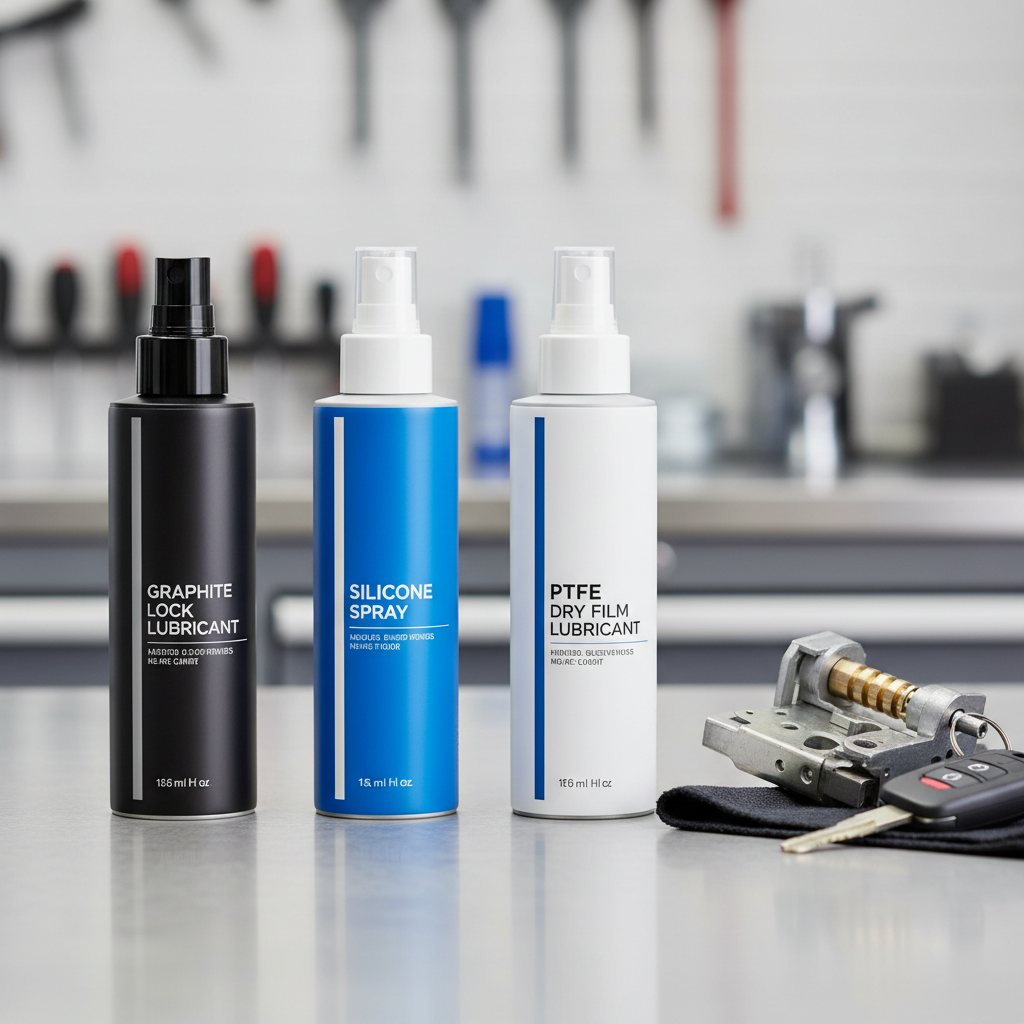
If you’re only picking one “all-around” option, many drivers do well with a plastic-safe PTFE dry film for cylinders and latch areas because it lubricates without staying wet. Still, there are situations where graphite or grease is the better call.
Best car door lock lubricant types (and when to use each)
Instead of declaring a single winner, it’s more honest to treat this like a small toolkit. “Best” depends on where you’re lubricating: the key cylinder, the latch, or the hinges.
Dry graphite (powder or lock tube)
- Good for: key cylinders, especially older mechanical locks.
- Why people like it: stays dry, doesn’t attract dust the way oils do.
- Watch-outs: messy if overapplied; can clump if there’s existing oil inside.
PTFE dry film (Teflon-type)
- Good for: cylinders, latches, light linkages, dusty environments.
- Why it works: dries to a slick film, usually plastic-safe, less dirt buildup.
- Watch-outs: needs a few minutes to dry; overspray can leave a faint film on paint if you’re careless.
Silicone spray (plastic/rubber friendly)
- Good for: weatherstripping near the door, some latch areas, reducing rubber squeaks.
- Why it’s useful: generally gentle on rubber and plastics, helps prevent sticking seals in winter.
- Watch-outs: not always the best for gritty cylinders; some silicone sprays stay wetter than you expect.
Synthetic white lithium grease (or similar)
- Good for: door latch jaws, hinges, striker contact points (tiny amounts).
- Why it helps: long-lasting under pressure, quiets metal-to-metal contact.
- Watch-outs: can collect grime; avoid stuffing grease into the key cylinder.
As a practical rule, keep the cylinder “dry” and the latch “greased lightly.” That combination solves most daily complaints without turning your lock into a dirt magnet.
Comparison table: Choosing the right option fast
| Lubricant type | Best use area | Strength | Common downside |
|---|---|---|---|
| Dry graphite | Key cylinder | Stays clean, good feel | Messy, dislikes oily residue |
| PTFE dry film | Cylinder, latch, linkages | Low dirt attraction, versatile | Needs drying time, overspray risk |
| Silicone spray | Weather seals, light latch use | Rubber/plastic friendly | May not fix gritty cylinders |
| Synthetic grease | Hinges, latch jaws, striker | Durable under load | Can trap grime if overused |
How to apply without making a mess (cylinder + latch)
The goal is thin coverage where parts slide, not a wet bath. A controlled applicator and a wipe-down plan matter more than most people think.
Door lock cylinder (keyway)
- Blow out loose grit with compressed air if available, keep the nozzle at a safe distance.
- Use a short burst of PTFE dry film or a small puff of graphite into the keyway.
- Insert the key, cycle it gently several times, then wipe the key clean.
- Let dry film products set for a few minutes before driving in dusty or wet conditions.
Door latch (edge of the door)
- Open the door, locate the latch jaws on the door edge.
- Apply a tiny amount of synthetic grease to contact surfaces, or use PTFE dry film if you prefer a cleaner finish.
- Close the door slowly a few times to spread it, listen for the “clean click” returning.
- Wipe any visible excess so it doesn’t sling onto paint.
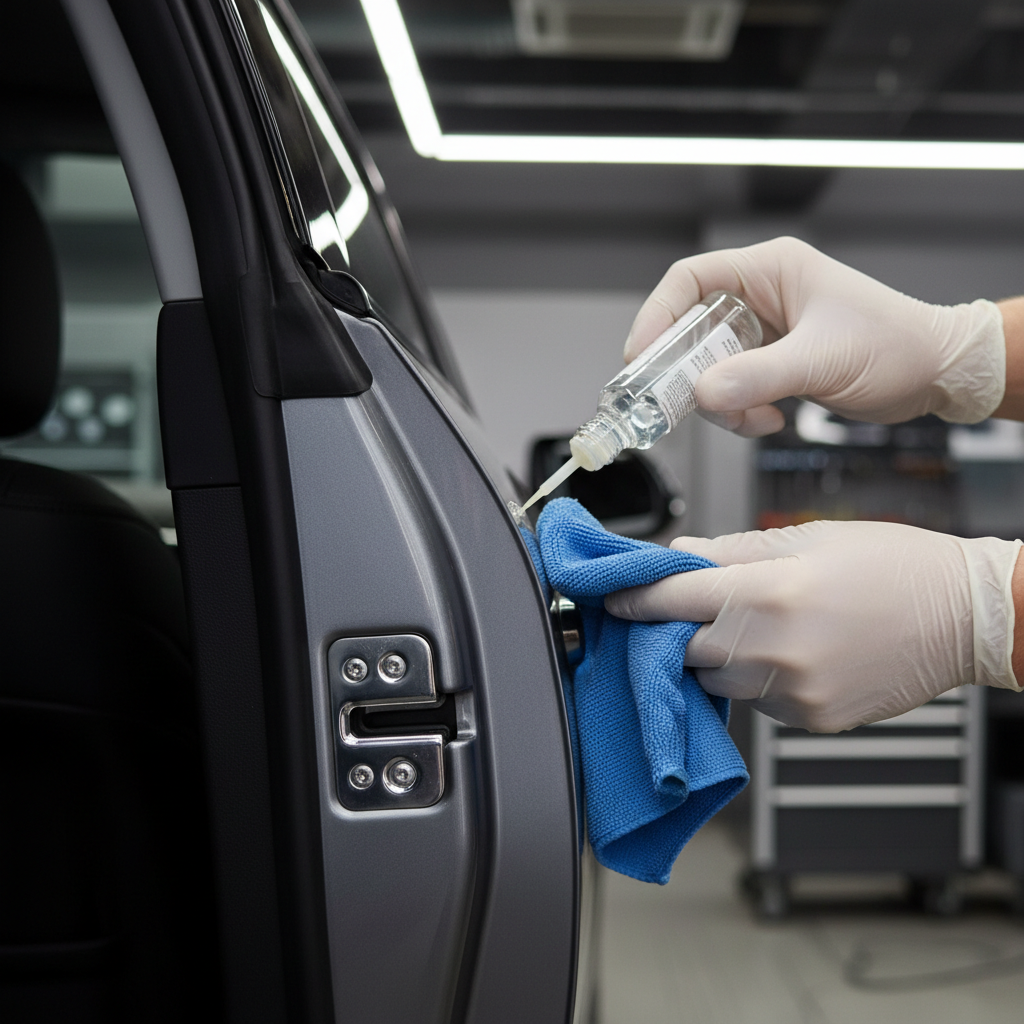
If your car has keyless entry only, you still have a mechanical latch and linkages. In that situation, the best car door lock lubricant is often the one that keeps the latch smooth without building grime, usually a dry film or light synthetic product.
Mistakes that usually backfire
Some products feel great for a week, then things get worse. This is where many “I tried lubricant and it didn’t work” stories come from.
- Using heavy oils in the cylinder: they can hold grit, then the key starts feeling sandy.
- Over-spraying into the door: overspray can land on window tracks, trim, or speakers, and it’s annoying to clean.
- Mixing graphite with old wet lubricants: clumping is common, cleaning the cylinder may be needed.
- Ignoring the latch and only treating the keyway: many “sticking” complaints come from the latch, not the cylinder.
- Forcing the key: if it binds hard, stop and reassess, forcing can bend a key or damage wafers.
According to SAE International, lubricant selection depends on materials compatibility and the environment. In plain English, plastic-safe and dirt-resistant products tend to win in daily driving conditions.
When lubrication isn’t enough (and what to do next)
Lubricant helps when friction is the problem. When parts are damaged or alignment is off, lubrication becomes a temporary bandage.
- Key turns but doesn’t actuate anything: linkage or actuator issues may exist inside the door.
- Door won’t latch consistently: striker alignment, worn latch, or a safety-related defect may be involved.
- Repeated freezing even after dry lube: water intrusion through seals or the handle area is possible.
- Metal shavings or severe grinding feel: the cylinder may be worn, replacement might be smarter than repeated sprays.
If the door fails to stay closed, or your vehicle has a known latch concern, it’s reasonable to consult a qualified mechanic or your dealer. Safety-related latch problems should not be “worked around.”
Key takeaways + a practical recommendation
If you want one simple plan: keep the key cylinder on a dry-style lubricant, keep the latch on a light grease or dry film, and avoid turning anything into an oily dust trap. That approach covers most climates and driving habits without drama.
- Best all-around type for many drivers: PTFE dry film for cylinder and light latch use.
- Best for older mechanical cylinders: graphite, assuming the cylinder isn’t oily inside.
- Best for door closing smoothness: a tiny amount of synthetic grease on latch contact points.
If you’re shopping specifically for the best car door lock lubricant in 2026, prioritize “plastic-safe,” “dry film,” and “lock/cylinder safe” labeling, then apply sparingly. The product matters, but the application habits matter just as much.
FAQ
What is the best car door lock lubricant for cold weather?
Many people do well with a lock de-icer for emergencies, followed by a dry film lubricant to reduce future sticking. Wet oils can sometimes worsen grime buildup, which doesn’t help in freezing conditions.
Can I use WD-40 on a car door lock?
It can free a stuck part in the moment, but it’s not always ideal as a long-term lock lubricant because it can leave residue that attracts dirt. If you use it, consider following up later with a lock-appropriate dry lubricant.
Is graphite safe for modern car locks?
It’s often fine for key cylinders, but modern locks can be sensitive to contamination, and graphite can clump if there’s oily residue inside. If you’re unsure, a plastic-safe dry film lubricant is usually a safer bet.
Should I lubricate the latch or just the keyhole?
Both matter, but the latch is frequently the bigger win for “hard to close” doors. The keyhole mainly affects key insertion and turning feel, while the latch affects closing effort and the sound of engagement.
How often should I lubricate door locks?
There’s no perfect schedule, but many drivers do it seasonally, especially before winter or after dusty summer driving. If the lock starts feeling gritty again, that’s your cue.
What lubricant is safe around rubber door seals?
Silicone spray is commonly used on weatherstripping because it’s generally rubber-friendly. Apply lightly and wipe excess so it doesn’t smear onto glass or paint.
My power lock is slow—will lubricant fix it?
Sometimes. Dry linkages or a sticky latch can add resistance, and lubrication can reduce load. If it stays slow, the actuator or electrical supply may be weak, a mechanic can confirm.
If you’re stuck between two options and you want a more “set it and forget it” routine, start with a plastic-safe dry film for the cylinder and a small amount of synthetic grease for the latch, it’s usually the least messy path with the most consistent results.