
Best car sun visors for extra wide coverage usually make sense when your factory visor leaves a strip of sun right at eye level, especially in wide windshields, low-angle commutes, or tall seating positions. If you find yourself tilting your head, squinting, or “chasing the sun” at traffic lights, this is less about comfort and more about keeping your eyes relaxed and your attention on the road.
Most people start by buying a generic extension panel, then get annoyed because it sags, blocks the mirror, or never quite reaches the corner of the windshield. The good news is that “extra wide” doesn’t have to mean awkward, you just need to match the product style to your vehicle layout and how you drive.
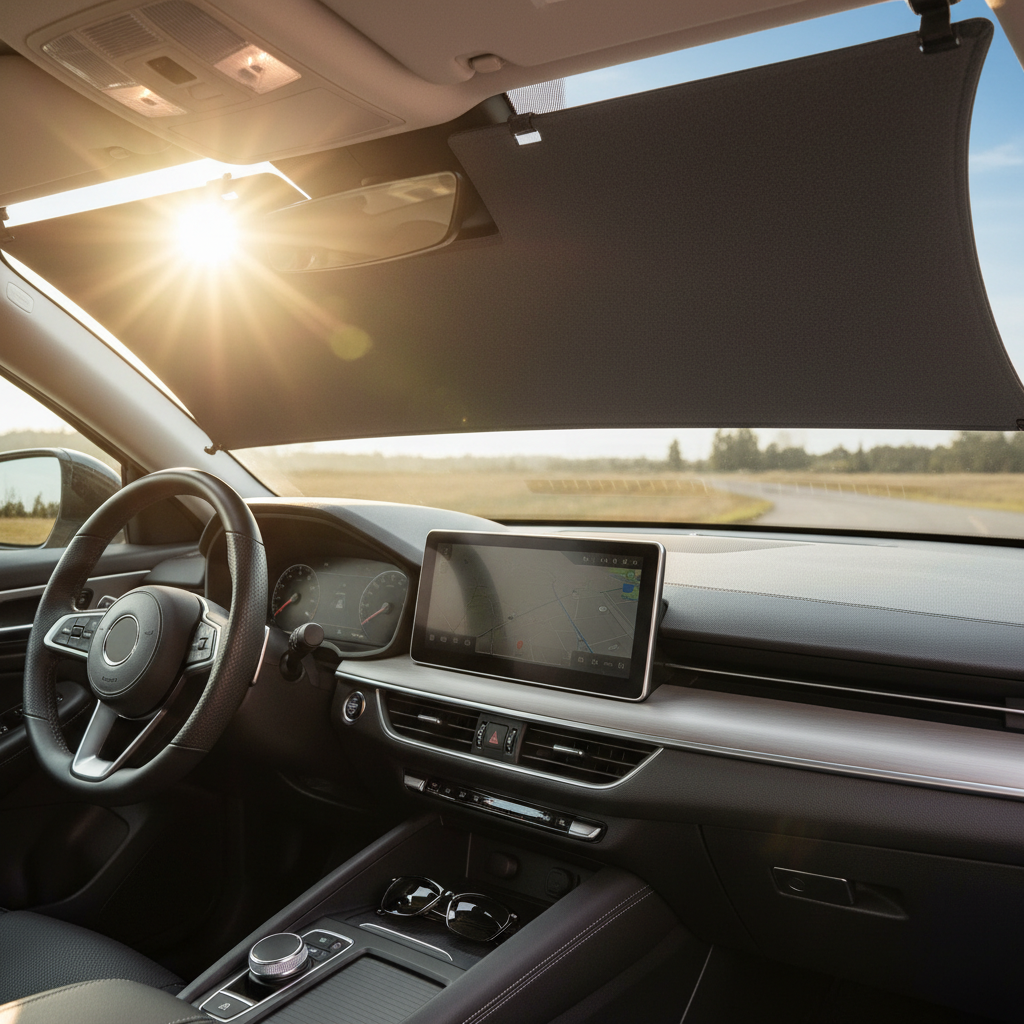
Below is a practical way to choose an extra-wide option that actually fits, a quick checklist to diagnose what you need, and a few install tips that help avoid the common “it looked good online” disappointment. I’ll also flag when it’s smarter to stop DIY and ask a shop for help.
What “extra wide coverage” really means (and why many products disappoint)
In product listings, “extra wide” can mean three different things, and mixing them up is where bad buys happen.
- Wider horizontal span: covers more of the windshield left-to-right, helpful when sun leaks near the A-pillar.
- Deeper drop: hangs lower to block a low sun, helpful at sunrise/sunset, but can interfere with sightlines if overdone.
- Better angle range: pivots and slides farther so you can track sun positions without constantly readjusting.
Many low-cost clip-ons are “wide” on paper but lose usefulness because they wobble, creep down over bumps, or flex so much that coverage shifts as you drive. Coverage that won’t stay put is basically no coverage.
According to NHTSA, glare can contribute to reduced visibility for drivers, and anything that blocks your view can also raise risk, so the goal is a stable shade that cuts glare without creating new blind spots.
Quick self-check: which extra-wide sun visor style fits your situation?
This is the fastest way to narrow down the best car sun visors for extra wide use without buying three different “universal” pieces.
A. Your pain point is the corner sun near the A-pillar
- You get a bright triangle of sun on the far left or far right
- You notice it most when turning, merging, or on curved ramps
- You don’t necessarily need a lower drop, you need side reach
Typically works best: wide slide-out extenders or visors with a secondary swing panel.
B. Your pain point is low-angle sun straight ahead
- Stoplights feel brutal, even with sunglasses
- You’re tempted to “duck” behind the visor
- Your factory visor ends too high, leaving a strip of glare
Typically works best: deeper drop-down extenders (but you’ll want careful placement to avoid blocking the road).
C. Your pain point is glare plus heat and dashboard fade
- Cabin heats up fast during parking
- Dashboard gets harsh sunlight for hours
- You want coverage beyond the visor while parked
Typically works best: windshield sun shades for parking, paired with a moderate wide visor extender for driving.
Comparing top options: extra-wide visor types and trade-offs
Rather than naming one “winner” for everyone, it’s more honest (and more useful) to compare the formats that dominate the market. Use this table as your shortlist tool.
Key takeaways: If you value stability, avoid very long, heavy add-ons with weak clips. If you share the car, prioritize easy flip-up and low interference with mirrors and sensors.
| Type | Best for | Pros | Watch-outs |
|---|---|---|---|
| Slide-out wide extender | Corner glare near A-pillar | Good lateral coverage, usually stays above eye line | Some models rattle or drift; check clip grip strength |
| Drop-down tinted panel | Low sun straight ahead | Quick glare cut, can reduce squinting | Can block traffic lights for tall drivers; tint clarity varies |
| Dual-panel (wide + drop) | Mixed conditions, long commutes | Flexible coverage range | More weight on factory visor; cheaper hinges loosen faster |
| Visor replacement (vehicle-specific) | Factory visor too small or worn | Clean look, often best fit and stability | Compatibility, cost, and install complexity vary by vehicle |
| Parking windshield sun shade | Heat control when parked | Big coverage, protects interior materials | Not for driving; storage size matters |
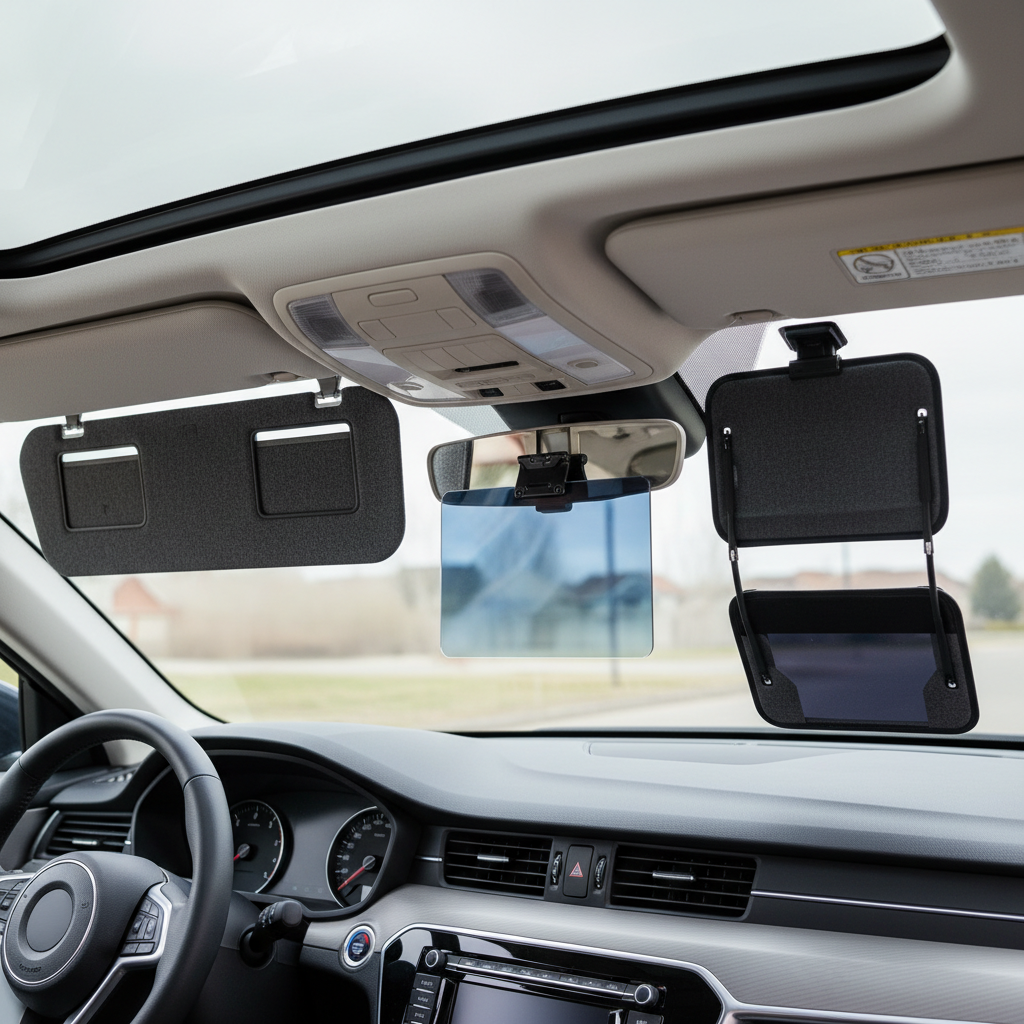
If you’re shopping online, look for photos that show the extender fully deployed from the driver seat perspective, not just a studio shot. The “feel” of coverage is hard to judge from product dimensions alone.
How to choose: sizing, materials, and fit details that matter
When people say they want the best car sun visors for extra wide coverage, they often mean “wide enough, but not annoying.” These checks help you land in that sweet spot.
Measure the problem area (it’s quicker than returning stuff)
- Horizontal gap: With the factory visor down, note how many inches of glare remain at the left/right edge.
- Vertical gap: Note the strip of light under the visor at your normal seating height.
- Mirror clearance: Confirm how much space exists around the rearview mirror housing, sensors, and dashcam mounts.
Material and optical clarity
- Opaque fabric panels block light well but can feel bulky; great when you want maximum shade.
- Tinted transparent panels can preserve some visibility, but clarity varies, cheap plastic can distort lights at night if left down.
- Stitching, hinge pins, and clip pads matter more than marketing terms, those are the failure points.
One practical rule: if a product relies on a small plastic hinge to hold a large panel, expect that hinge to loosen over time, especially in hot climates where plastics soften.
Installation and setup: get stable wide coverage without blocking your view
Most visor extenders are simple, but the setup details decide whether it stays steady or becomes a distraction.
- Start with the seat position you actually drive in, then set the visor. Adjusting the seat after the extender is set usually changes the sightline enough to annoy you.
- Clamp close to the visor’s support rod when possible. That area tends to flex less than the free end.
- Avoid covering airbags, cameras, or sensors. Many modern vehicles place safety and driver-assist hardware around the mirror area.
- Test on a bumpy road at low speed: watch for sagging, vibration, and whether it slips when you flip the visor to the side window.
According to IIHS, driver-assistance systems depend on unobstructed sensors and cameras, so even “just a sun visor add-on” can become a problem if it blocks the wrong area.
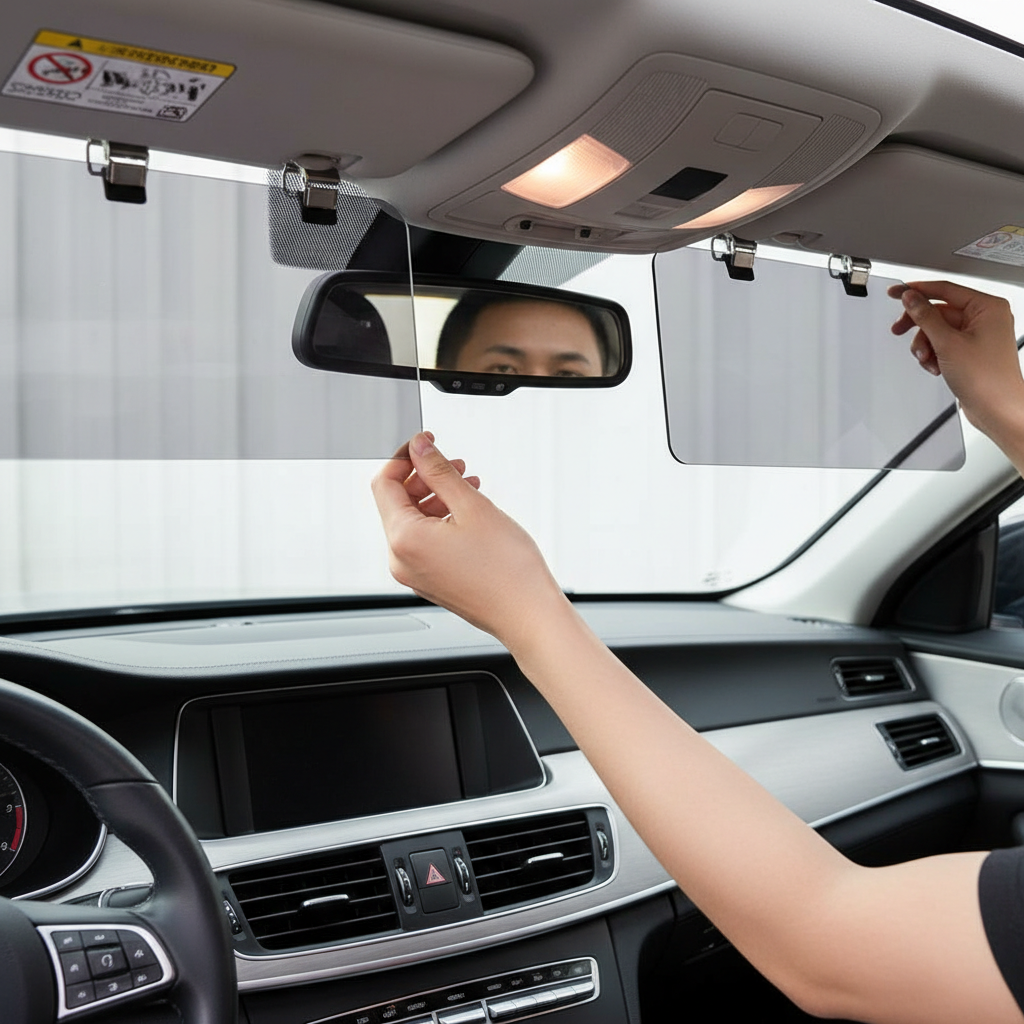
If you regularly drive at night, develop a habit: flip tinted panels up when the sun is gone. It sounds obvious, but a lot of “this product is bad” reviews are really “I forgot it was down and now headlights look weird.”
Common mistakes (and how to avoid wasting money)
- Buying “extra wide” without confirming visor thickness: some clips won’t clamp properly on thicker padded visors, while others damage thin ones.
- Over-prioritizing width and ignoring weight: heavy add-ons make factory visors droop, then nothing lines up anymore.
- Using a very dark tint: it can feel great in full sun, then turn into a visibility issue when you enter shade, tunnels, or tree cover.
- Expecting one product to solve parking heat and driving glare: windshield shades and driving visors are different tools.
If your visor already sags or won’t stay in position, fix that first or choose a lighter extender. Adding more weight to a tired hinge usually ends in frustration.
When to consider professional help or a vehicle-specific solution
Most drivers can handle visor extenders, but a few situations are worth a more careful approach.
- ADAS-heavy vehicles (cameras near mirror, lane-keeping): ask the dealer or a reputable shop if an add-on could interfere with sensor visibility.
- Repeated glare headaches or eye strain: glare sensitivity can have multiple causes, it may be worth asking an eye care professional, especially if symptoms persist.
- Visor mounting damage: if the factory visor mount is loose, a shop can often advise on replacement parts rather than stacking accessories.
There’s no shame in choosing a vehicle-specific visor replacement if your current setup fights you every day. It tends to look cleaner and behave more predictably, even if it costs more.
Practical buying checklist (save this before you shop)
- Coverage goal: corner reach, low-sun drop, or both
- Compatibility: visor thickness, mirror/sensor clearance, ability to flip to side window
- Stability: firm clips, tight hinges, low vibration in reviews
- Optics: clear tint with minimal distortion, easy flip-up
- Heat reality: add a parking shade if cabin heat is the bigger issue
Conclusion: the “best” extra-wide visor is the one you stop thinking about
The best car sun visors for extra wide coverage are the ones that fill your specific gap, stay stable over bumps, and don’t force you to sacrifice visibility. If you only fight corner glare, a slide-out wide extender is often the cleanest move. If your real enemy is low-angle sun, a controlled drop panel can help, just keep sightlines and tint clarity front and center.
Your next step is simple: measure the glare gap, check mirror and sensor clearance, then choose the lightest product that still covers the problem. If you’re unsure, buy from a retailer with easy returns, because fit can vary more than listings suggest.
FAQ
- Do extra wide sun visor extenders fit any car?
Many are marketed as universal, but fit depends on visor thickness, the shape near the support rod, and how close your mirror/sensors sit to the headliner. If your vehicle has a bulky mirror housing, double-check clearance before buying. - Will an extender damage my factory visor?
It can, especially if the clip edges are hard plastic or if you overtighten a clamp. Look for padded clips and avoid forcing a tight fit; if it needs brute strength, it’s probably not a good match. - Is a tinted transparent panel safe for driving?
It can be, but tint darkness and optical quality matter. If you notice distortion, halos, or reduced ability to read signals, flip it up and consider a clearer panel. When in doubt, prioritize visibility. - What’s better for wide windshields: slide-out or drop-down?
For wide windshields where sun sneaks in near the corners, slide-out designs tend to solve more real-world glare. Drop-down panels help most when the sun is low and straight ahead. - Can I use an extra wide visor with a dashcam?
Often yes, but placement gets tricky. Keep the dashcam lens and power cable path unobstructed, and ensure the extender won’t bump the camera when flipping the visor. If your dashcam sits close to the visor area, a slimmer extender usually works better. - Do I still need sunglasses if I install a wide visor extender?
Sometimes, yes. A visor reduces direct glare, sunglasses can reduce overall brightness and reflections. Many drivers use both, especially during sunrise/sunset. - How do I stop a visor extender from vibrating?
Reposition the clip closer to the visor’s support rod, tighten if adjustable, and add a thin non-slip pad if the product allows it. If it still shakes on normal roads, the hinge/clip design may simply be too weak for your vehicle.
If you’re shopping for a more “set it and forget it” setup, focus on extenders that show stable, driver-perspective coverage and have clear notes on visor thickness compatibility, it’s usually the difference between a quick win and another return trip.