how to dry a car without scratches comes down to two things: removing water with the least possible contact, and making every touch as clean and lubricated as you can.
If you have ever finished a wash, stepped back, and noticed faint swirls in the sun, drying is often where they start, not where you notice them. Water sits on paint, you grab whatever towel is nearby, one gritty pass later the clear coat pays for it.
This guide focuses on practical technique, towel choices that actually matter, and a quick way to diagnose what is causing your marks so you stop repeating the same mistake every weekend.
Why drying can scratch paint (even when you washed carefully)
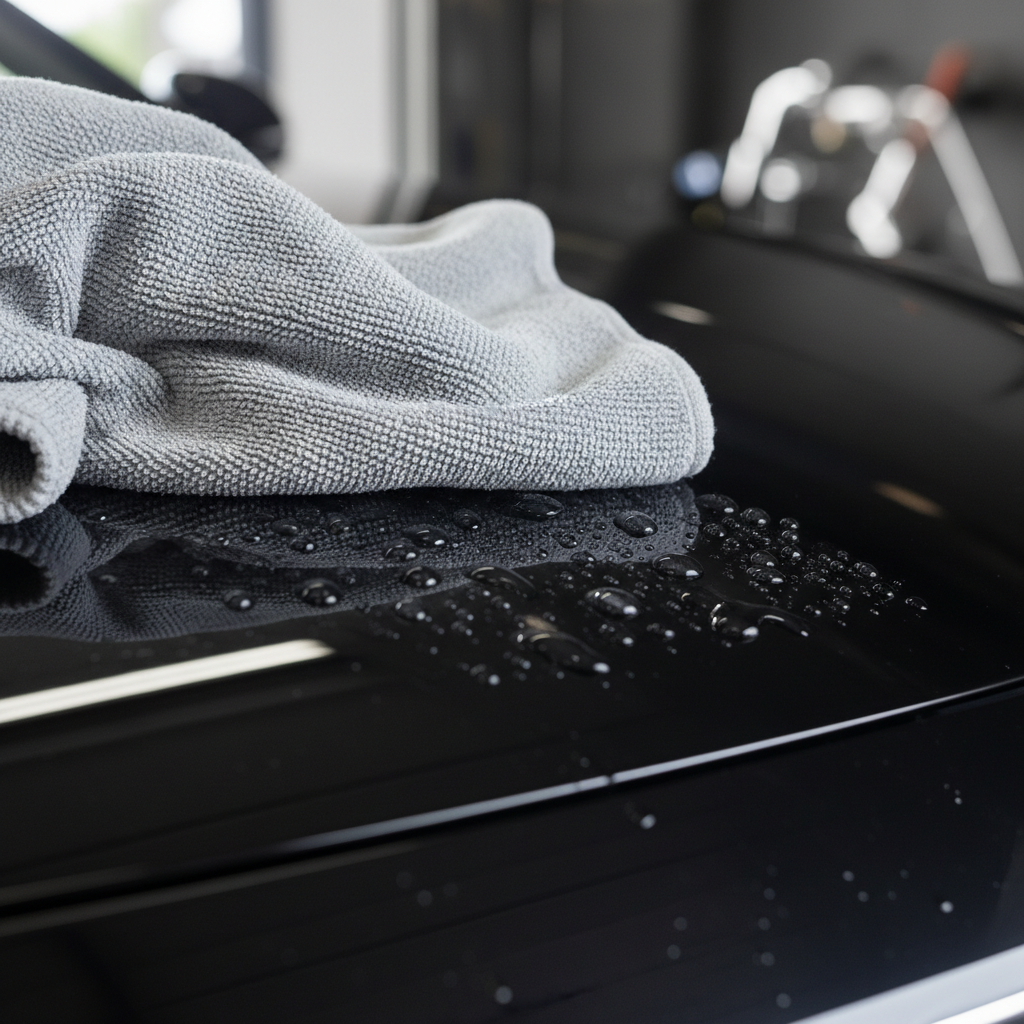
Most scratches from drying are really micro-marring, tiny clear-coat marks that show up as swirls under direct light. The trigger is usually friction plus contamination, not “pressure” alone.
- Leftover dirt: Even after a good wash, dust or road film can cling, especially on lower doors, bumpers, and the rear hatch.
- Wrong towel behavior: Some towels push water around instead of absorbing it, so you keep wiping longer than you should.
- Drying on a hot panel: Water spots force extra rubbing to “fix” them, which is where people get aggressive.
- Contaminated towels: A towel that touched the ground, a wheel, or a dirty trunk floor can carry grit you cannot see.
According to the International Carwash Association... using clean, well-maintained wash and dry media is a core step in reducing finish damage during the wash process. In plain English, clean tools matter as much as the soap.
A quick self-check: what kind of marks are you actually getting?
Before buying anything, figure out what you are seeing. Different marks point to different fixes, and this saves money.
Use this checklist after your next wash
- Long straight streaks: Often a towel that is too grabby, or drying aid used unevenly.
- Small circular swirls in sunlight: Usually dirt picked up during wiping, or a towel that is contaminated.
- Random isolated scratches: Common when a towel touched the ground, or you dried near badges and sharp trim.
- Hazy finish that looks “dragged”: Often towel saturation, you kept wiping with a wet, overloaded towel.
- Spots that will not wipe off: Likely mineral water spots, rubbing harder tends to make it worse.
If the marks only appear on the lower panels, your wash may be leaving more grime behind there, so the drying step takes the blame.
Tools that make scratch-free drying realistic
You do not need a wall of products, but you do need the right category of tools. If you are trying to learn how to dry a car without scratches, towels and airflow do most of the heavy lifting.
What to use (and what to skip)
- High-quality microfiber drying towel: Look for thick, plush or twisted-loop microfiber designed for drying. These absorb fast and reduce “extra passes.”
- Separate smaller microfiber towels: For door jambs, mirrors, emblems, and tight areas, so your main towel stays clean.
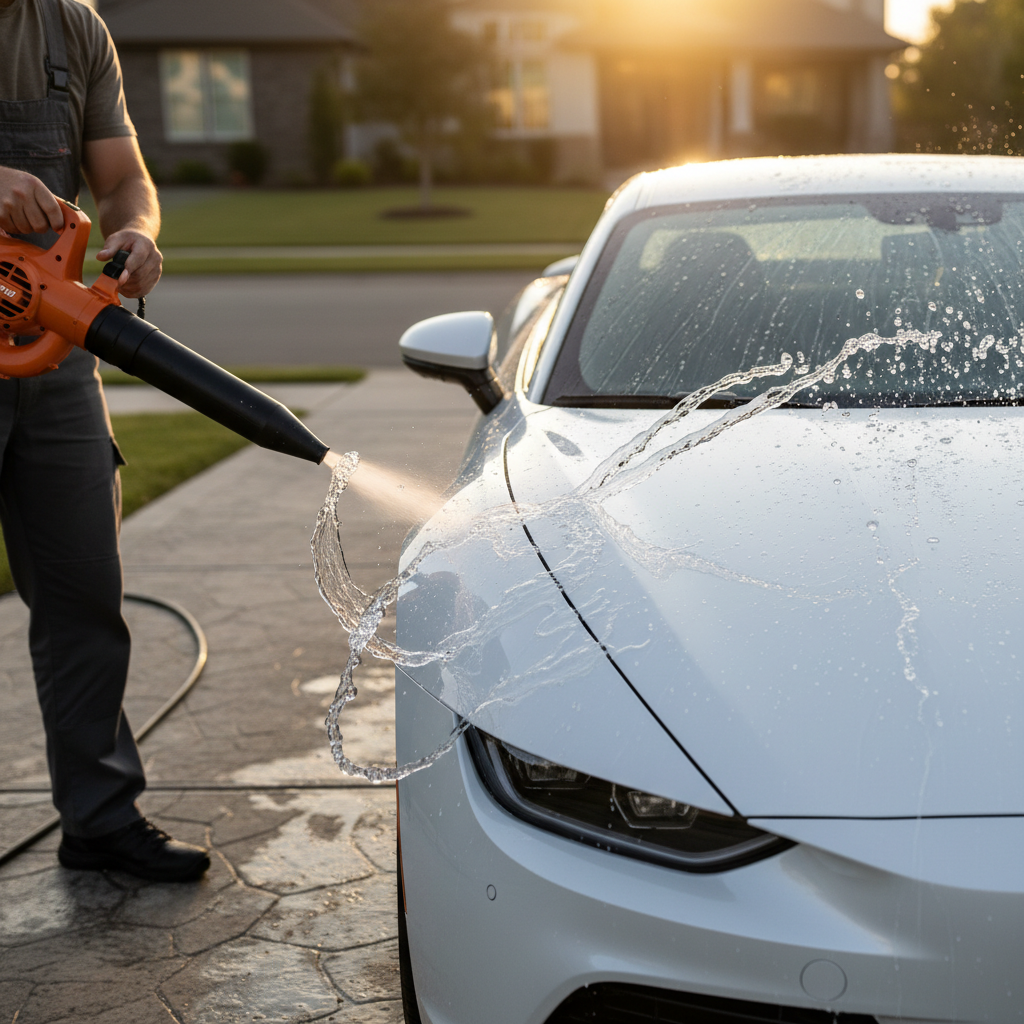
- Electric blower or dedicated car dryer: Touchless drying for mirrors, grilles, badges, and crevices where towels snag.
- Drying aid or spray sealant (optional but helpful): Adds lubrication and can reduce towel drag, plus leaves protection behind.
What usually causes problems: bath towels, old T-shirts, chamois that “stick,” and any towel that has been washed with fabric softener. Those tend to increase friction and leave residue.
Simple towel care rules that prevent most issues
- Wash microfiber separately from cotton, avoid fabric softener and dryer sheets.
- Use a dedicated microfiber detergent when possible, or a mild, fragrance-free liquid detergent.
- Air dry or tumble low, high heat can reduce softness over time.
- Retire towels that feel crunchy or pick up debris easily.
Step-by-step: how to dry a car without scratches
This process aims to minimize contact, then make the contact that remains as gentle as possible. If you only change one habit, change the technique.
1) Start with a final rinse that sheets water
Remove the nozzle and let a gentle stream of water run over panels. On many paints with some protection, water “sheets” off, leaving less to dry. Less water means fewer towel passes.
2) Dry crevices first with air
Blow out mirrors, trim seams, badges, grilles, fuel door area, and wheel faces if you plan to touch them. This prevents surprise drips after you think you are done.
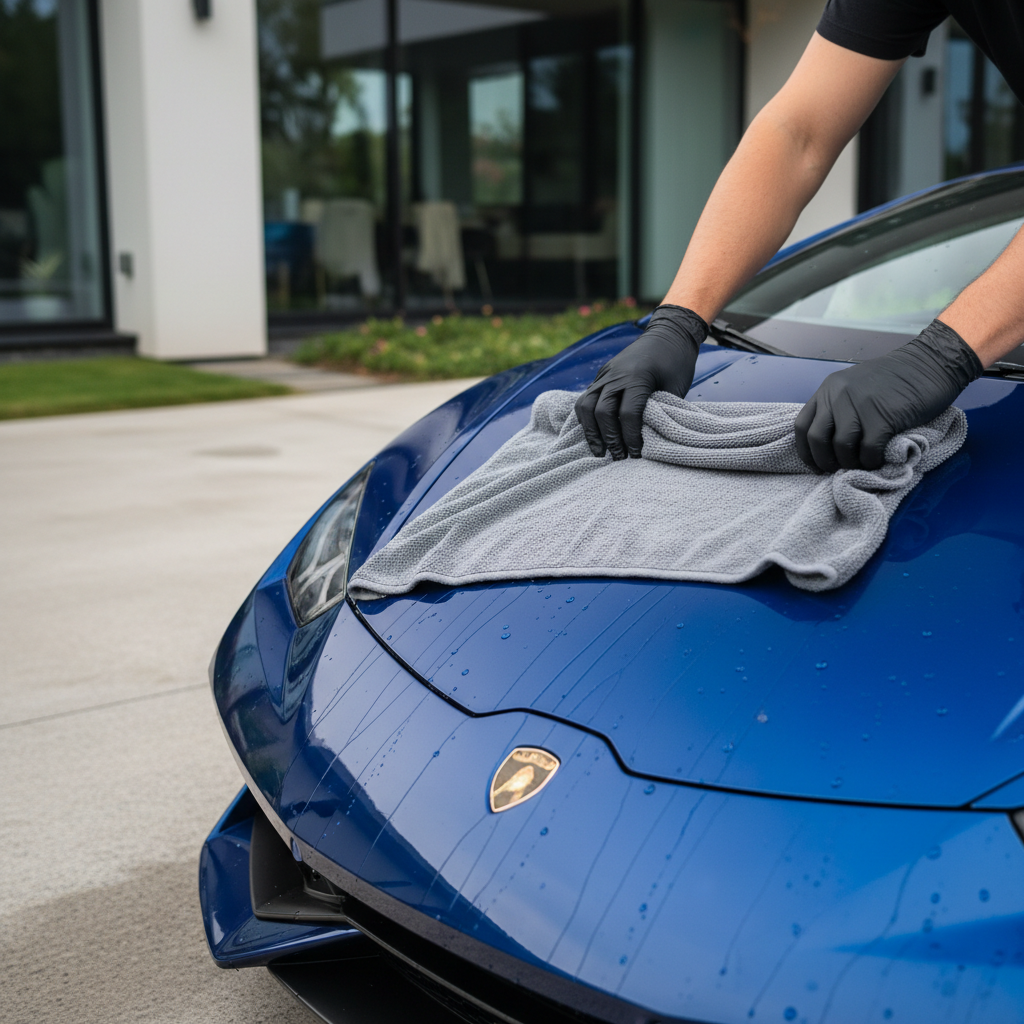
3) Use the towel like a blotter, not a scrubber
- Lay the towel flat on the panel, let it absorb, then lift.
- For remaining beads, use straight-line light passes with almost no pressure.
- Flip to a dry side often, once the towel feels saturated it starts pushing water around.
4) Work top to bottom, save the dirty zones for last
Roof, glass, hood, upper doors, then lower doors, bumpers, and rear area. Those lower sections collect the most grit, and you want the cleanest towel contact on the cleanest paint.
5) Use a drying aid when paint feels grabby
Lightly mist a drying aid on the panel or towel, then blot and glide. Do not soak the surface, too much product can smear and tempt you into extra wiping. Done right, it is one of the easiest ways to make how to dry a car without scratches feel less “fussy.”
Technique options (pick what fits your setup)
Not everyone has a garage, filtered water, or time to baby the finish. Here are three realistic routes.
| Method | Best for | Scratch risk | Notes |
|---|---|---|---|
| Touchless blow-dry first, towel finish | Most drivers | Low | Great compromise, reduces towel contact on paint |
| One large drying towel + drying aid | No blower available | Low to medium | Works well if towels are clean and you blot often |
| Pure towel drying, no aid | Quick washes, protected paint | Medium | Requires more passes, towel quality becomes critical |
If you live in an area with hard water, the “touchless first” method helps because you reduce time water sits on the paint.
Mistakes that quietly create swirls (and what to do instead)
Most people scratch paint during drying because they rush the last 10 percent. The fixes are small, but they matter.
- Wiping a dusty car “just to get water off”: If you skipped a proper wash, you are basically dry-wiping dirt. Rinse and foam first, even briefly.
- Reusing one towel for everything: Keep a separate towel for lower panels and another for jambs.
- Chasing every drip with the same side of the towel: Flip frequently, saturated microfiber turns into a squeegee.
- Pressing harder when the towel drags: Add lubrication with a drying aid, or switch towels.
- Drying in direct sun on hot paint: If you cannot avoid it, work one panel at a time and dry immediately after rinsing.
According to the U.S. Environmental Protection Agency (EPA)... washing vehicles on permeable surfaces and controlling runoff can reduce polluted stormwater entering drains. If you adjust your wash spot for environmental reasons, it can also make drying easier because you can work in shade and away from wind-blown dust.
When you may need professional help (or at least a different plan)
If you already see heavy swirling, drying more carefully prevents new damage but does not erase old marks. That is when paint correction comes up, which is machine polishing to level defects in the clear coat. It can be safe in skilled hands, but it is also easy to overdo at home.
- Consider a pro detailer if swirls show on most panels in sunlight, or you see deeper scratches you can feel with a fingernail.
- Consider a water deionizer or rinseless wash approach if hard-water spotting keeps forcing you into extra wiping.
- Consider paint protection like a sealant, ceramic spray, or coating if your paint always feels “dry” and grabs towels, protection often makes drying smoother.
If you are unsure whether a defect is in the clear coat or something on top of it, a reputable detailer can usually diagnose quickly, and that saves you from buying tools that will not address the real issue.
Key takeaways to keep your paint scratch-free
- Minimize contact: sheet rinse, then blow out crevices.
- Make contact safer: clean microfiber, blotting technique, straight-line light passes.
- Control the “dirty areas”: lower panels last, separate towels.
- Add lubrication when needed: a modest drying aid reduces drag and panic-rubbing.
If you want one simple action step, upgrade your drying towel and change your technique to blot-first. For most people, that single change is the fastest route to learning how to dry a car without scratches in real life, not just in theory.
FAQ
Is a chamois safe for drying a car?
It can be, but many chamois styles tend to stick and encourage pressure. A quality microfiber drying towel is usually more forgiving because it holds dirt away from the paint better.
Do I need a drying aid every time?
Not always. If your paint has decent protection and your towel glides easily, you can skip it. When the towel drags or you are working in warm sun, a small amount often helps reduce unnecessary wiping.
What is the safest pattern to dry paint?
Light, straight-line passes are typically preferred because they make any accidental marring easier to correct later than tight circles. Blotting first reduces how much wiping you do at all.
Can I dry my car with a leaf blower?
Many people do, and it can reduce paint contact a lot. Use a clean blower, avoid aiming at dusty ground right next to the car, and finish with a towel for any remaining water.
Why do I get water spots while drying?
Hard water and drying too slowly are common causes. Try drying panel-by-panel, moving into shade, or using a final rinse method that sheets water off to reduce standing droplets.
How many towels do I realistically need?
For a typical sedan, two drying towels plus a couple smaller microfiber towels for details is a comfortable setup. If you tend to wash in dusty conditions, having an extra clean towel is a nice safety net.
Will ceramic coating stop scratches during drying?
It can make drying easier because water beads and releases faster, but it does not make paint scratch-proof. You still need clean towels and good technique.
If you are still seeing marks after improving towels and technique, you may get better results by simplifying your process, adding a gentle drying aid, and separating “clean paint” tools from “grimy areas” tools, it is usually the difference between a glossy finish and mystery swirls.