
The best car trunk light led upgrade for dark cargo is the one that actually puts light where your hands work, without triggering bulb-out warnings or creating annoying glare.
If your trunk feels like a cave at night, you already know the real problem: you’re not trying to “make it brighter,” you’re trying to see the corner where a grocery bag slid, the latch area, or the spare tire well. A cheap LED can look bright when you stare at it, then still leave dark pockets everywhere.
This guide helps you pick an LED upgrade that fits your vehicle, stays error-free, and improves real-world cargo visibility, plus a simple install checklist so you don’t end up with rattles, flicker, or a dead battery surprise.
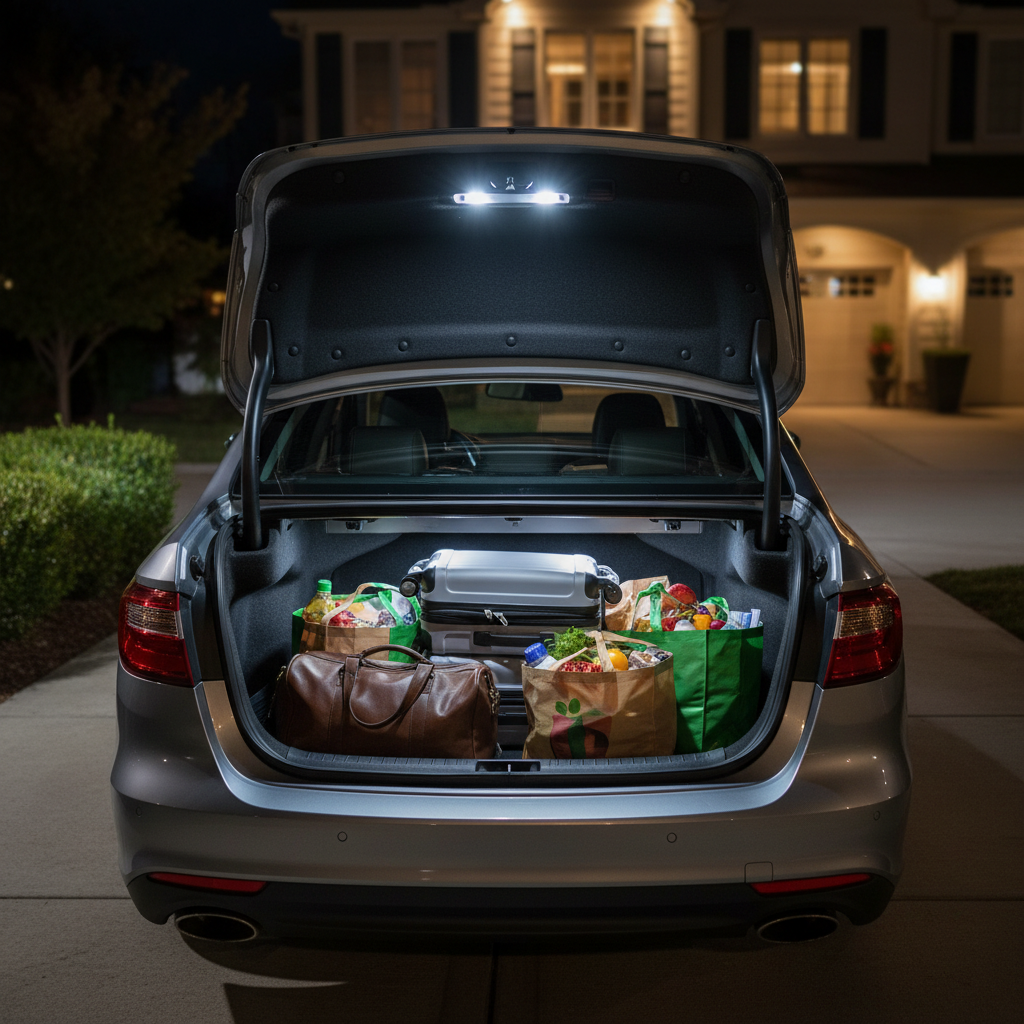
Why factory trunk lights feel dim (and why “brightest” isn’t always best)
Most factory trunk lamps are designed to be cheap, low-draw, and “good enough” for occasional use. That’s fine until you’re loading after sunset, traveling, or using the cargo area daily.
- Low lumen output: many OEM bulbs are small and warm, and light gets lost in dark carpet and trim.
- Bad placement: a single side-mounted light often casts a strong shadow across the middle.
- Lens diffusion limits: the factory housing may block or scatter light in unhelpful directions.
- Voltage behavior: some cars use PWM (pulse-width modulation) which can cause LED flicker unless the LED is compatible.
Also, “blinding bright” can be a downgrade. Too much intensity from a bare emitter creates glare when you lean in, and it can wash out depth perception in tight spaces.
Quick self-check: what kind of LED trunk upgrade do you actually need?
Before buying anything, take two minutes to figure out what you’re solving. Your answer changes the product type.
Pick the scenario that matches you
- It’s just dim: you likely need a bulb swap in the existing housing, with a quality diffuser.
- There are dark corners: consider a wider-beam LED, or adding a second light on the opposite side if your car supports it.
- You get bulb-out warnings: you’ll likely need a CAN bus–friendly LED or an added load resistor (more on that below).
- Light flickers: look for “no flicker” / PWM-compatible designs, or a dedicated LED module made for your vehicle.
- You keep the trunk open while camping/working: prioritize low heat, stable current control, and a realistic power draw.
What to check on your car
- Bulb type (common examples: 194/T10, 31mm/36mm/39mm/42mm festoon). Your owner’s manual or the current bulb stamping helps.
- Lens style: clear vs frosted, and how much room is behind the housing for a thicker LED.
- Whether the trunk light shares circuits with interior lights, which can affect error detection.
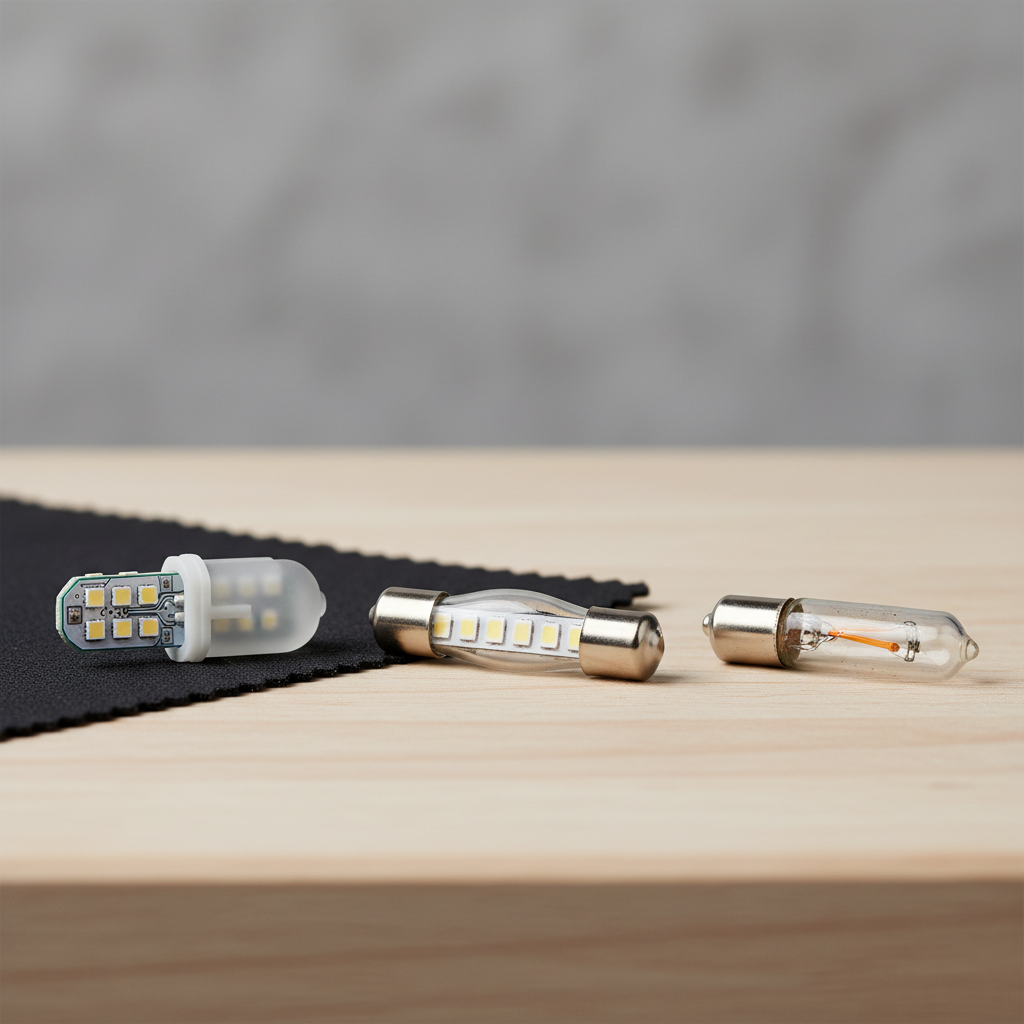
What to look for in the best car trunk light LED upgrade for dark cargo
When people search for the best car trunk light led upgrade for dark cargo, they usually mean three things: more usable light, no headaches, and it lasts. Here’s what actually matters.
- Beam pattern over raw lumens: a wider, even spread beats a narrow hotspot in a trunk.
- Color temperature that feels natural: many people prefer 4000K–6000K for cargo areas; ultra-blue light can feel harsh and makes some items look “off.”
- CAN bus compatibility (when needed): helps avoid bulb-out messages and hyper-flash behavior on some vehicles.
- Thermal management: LEDs hate heat; look for designs with a proper heat sink or an efficient low-heat layout.
- Polarity + fit: some wedge LEDs need to be flipped if they don’t light up, and some housings have tight tolerances.
- Diffusion: built-in diffusers reduce glare and improve “see into corners” performance.
According to NHTSA, lighting helps drivers see and be seen, and while trunk lighting isn’t the same as exterior lighting, the safety principle is similar: visibility reduces mistakes. The practical takeaway is simple, choose brightness you can use without glare.
Comparison table: common trunk LED upgrade paths
Not every vehicle (or budget) needs a full module swap. Use this as a quick map.
| Upgrade type | Best for | Pros | Watch-outs |
|---|---|---|---|
| Plug-in bulb replacement | Most basic dim trunks | Fast, low cost, usually tool-free | May flicker or throw warnings on some cars; beam can be uneven |
| Vehicle-specific LED housing/module | People who want “factory-like” results | Better diffusion, cleaner install, often error-free | Costs more; must match trim/year exactly |
| High-output LED + resistor | Cars sensitive to bulb load | Can solve warnings, keeps brightness | Resistors can get hot; mounting and wiring should be careful |
| Adding a second cargo light (if supported) | Dark corners, shadow problems | Most noticeable real-world improvement | May require wiring or factory provisions; not universal |
Installation steps that prevent flicker, broken clips, and frustration
You can usually install a trunk LED upgrade in 10–20 minutes. The biggest time sink is fighting trim clips or buying a bulb that doesn’t fit.
Tools you’ll want nearby
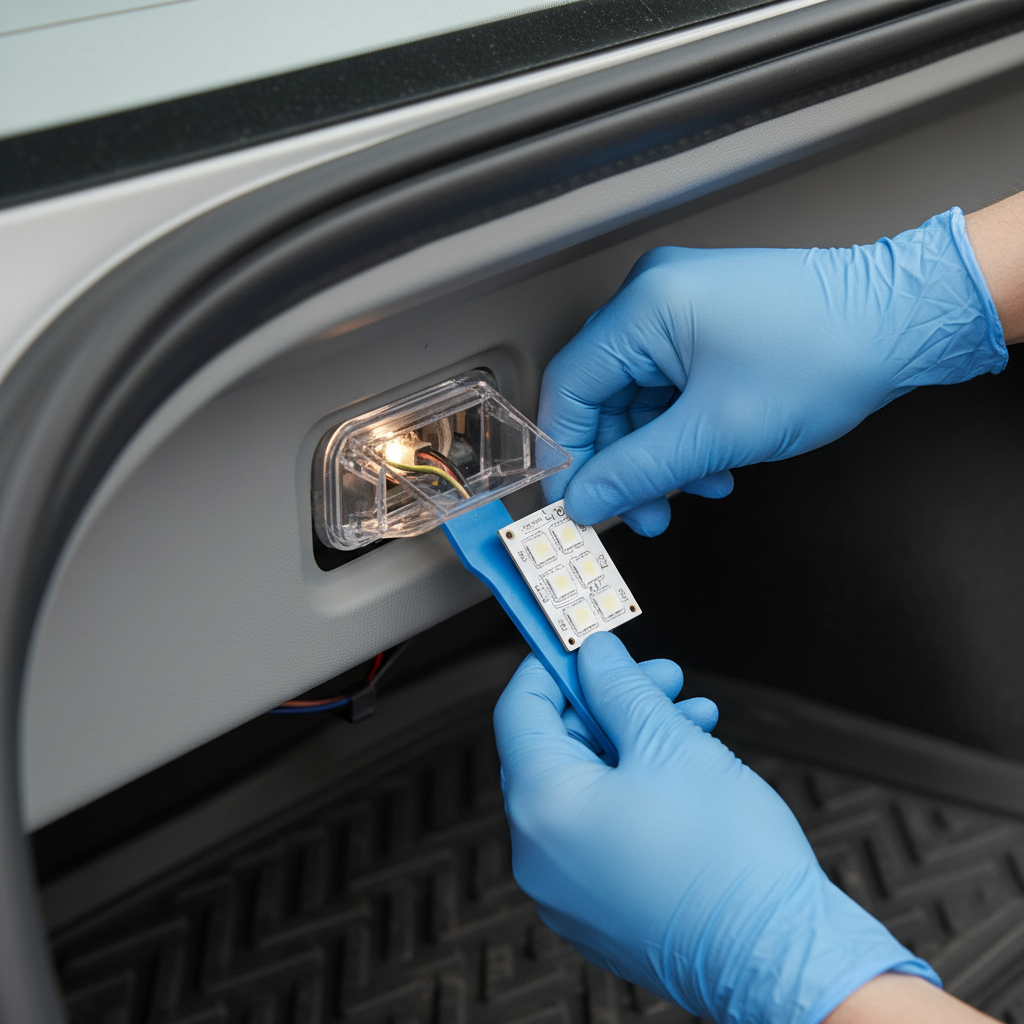
- Plastic trim tool (or a wrapped flathead screwdriver)
- Gloves or a clean cloth (keeps oils off lenses)
- Small flashlight (ironic, but helpful)
Step-by-step (works for most bulb swaps)
- Turn the car off, open the trunk, and locate the cargo light housing.
- Gently pry the housing out from the notched edge, don’t yank the wiring.
- Remove the old bulb and match size/contacts before inserting the LED.
- Test before reassembling. If it doesn’t light, flip polarity for wedge bulbs.
- Re-seat the housing until it clicks, then check for rattles by tapping trim lightly.
If you’re doing a full module swap, follow the included fitment guide. Vehicle-specific modules usually click in cleanly, but only when the tabs align perfectly.
Real-world “best” picks by use case (not by hype)
There isn’t one universal winner for the best car trunk light led upgrade for dark cargo. In practice, “best” depends on your car’s electronics and what annoys you most today.
If you want the simplest win
- Choose a plug-in LED designed for interior/cargo use, with a frosted lens or diffuser.
- Avoid ultra-cheap multi-pack bulbs where heat control and quality vary a lot.
If you hate dashboard warnings
- Look for CAN bus–compatible trunk/cargo LEDs, and confirm your exact model year.
- If warnings persist, a resistor may help, but heat management matters and some people prefer a shop to handle it.
If shadows are the main issue
- Prioritize wide-beam LEDs, or add an opposite-side light if your trim has a blank panel for it.
- Don’t chase maximum color temperature, chase even coverage.
If you frequently leave the trunk open
- Pick efficient LEDs with stable drivers, and consider a trunk light switch or timer behavior on your vehicle.
- Some cars keep interior circuits awake longer than expected; if you’re unsure, check your manual or ask a technician.
Mistakes people make (and why they keep buying bulbs)
- Buying by “lumens” alone: marketing numbers don’t tell you beam spread, glare, or heat.
- Ignoring fitment notes: a few millimeters too long can prevent the lens from snapping back in.
- Using resistors casually: resistors can run hot, and mounting them on plastic trim is asking for trouble.
- Mixing color temps across the cabin: it’s not dangerous, it just looks odd and can feel “cheap” at night.
- Forgetting to test before reassembly: everyone does it once, and then never again.
According to SAE International, automotive lighting standards focus heavily on performance and safety expectations. While trunk lights aren’t regulated like headlamps, sticking with automotive-grade components and reasonable heat control aligns with how the industry approaches reliability.
When to get help from a pro (it’s not overkill)
If your trunk lighting upgrade turns into wiring, error codes, or heat concerns, it’s reasonable to ask for help. A shop can usually diagnose whether you’re dealing with load detection, a shared interior lighting module, or a damaged housing connector.
- You see repeated bulb-out warnings after trying a compatible LED.
- The LED stays faintly on when the trunk is closed, which could point to a circuit behavior issue.
- You need to add resistors, tap wiring, or mount heat-producing parts.
- You’re not sure whether your car’s warranty could be affected, a dealer service advisor can clarify what’s typical.
Key takeaways and a practical next step
If your cargo area is truly dark, the most noticeable improvement usually comes from even light spread and clean compatibility, not the most aggressive brightness claim on the package. Start by identifying your bulb type, then choose a diffused, automotive-grade LED that fits your housing.
If you want one action item today, pull the trunk light, confirm the bulb style, and take a quick photo of the socket and housing depth, that single step prevents most wrong-buys and gets you to a trunk you can actually use at night.
FAQ
What is the best car trunk light led upgrade for dark cargo if I just want a quick swap?
A plug-in LED bulb with a diffuser is usually the easiest, as long as it matches your bulb type and fits your housing depth. If your car is sensitive to bulb load, pick a CAN bus–friendly option.
Will an LED trunk light drain my battery?
Most LED trunk bulbs draw less power than incandescent, but battery drain can still happen if the trunk stays open for long periods or if the car keeps the interior circuit awake. If you camp or work from the trunk often, it’s worth checking your vehicle’s interior light timeout behavior.
Why does my new trunk LED flicker?
Flicker is often caused by PWM dimming or a body control module that doesn’t love the LED’s driver. A “no flicker” LED or a vehicle-specific module often fixes it; resistors sometimes help but introduce heat, so use caution.
Do I need CAN bus LEDs for a trunk light?
Some vehicles will never complain, others will show a bulb-out warning quickly. If your car has had warning issues with other interior LEDs, it’s safer to choose a CAN bus compatible trunk/cargo bulb.
Is 6000K too blue for a cargo area?
It depends on preference. Many people like 5000K–6000K because it reads “clean” and improves perceived brightness, but very cool light can feel harsh. If you want a more natural look, 4000K–5000K is often easier on the eyes.
Can I add a second trunk light?
On some cars, yes, especially if the opposite side has a blank panel and the wiring is present. If wiring is not present, adding a second light becomes a custom job, and many people choose a shop to keep it tidy and safe.
My LED doesn’t turn on, is it defective?
Not necessarily. Many wedge LEDs are polarity-sensitive, so flipping it 180 degrees can solve it. If it still doesn’t work, check socket tension and confirm you bought the correct bulb size.
If you’re trying to get a brighter trunk without warnings, flicker, or trial-and-error returns, it can help to start from your exact bulb type and housing style, then pick an LED built for interior/cargo use rather than a generic “everything” bulb.