
The best car battery chargers for 12v are the ones that match your battery type, charge rate, and how you actually use your vehicle, not just the biggest amp number on the box.
If you have a car that sits for days, a truck that sees winter starts, or a weekend toy that drains slowly in storage, an automatic “smart” charger can save you from dead-battery mornings and from accidentally cooking a battery with the wrong settings.
This guide focuses on practical picks and how to choose: what “automatic” really means, what features matter (and which are marketing), and a quick checklist to avoid buying the wrong charger for your 12V battery.
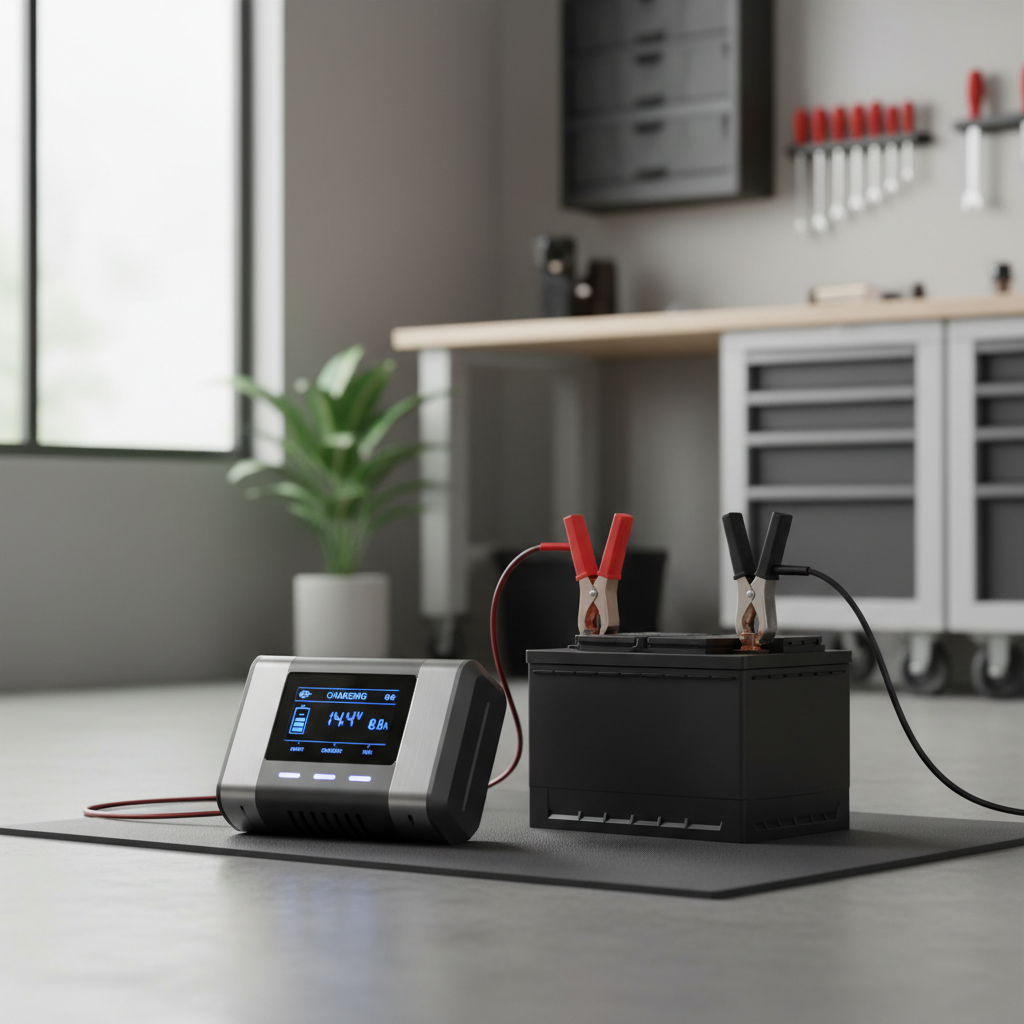
What “automatic” means on a 12V car battery charger
Most modern chargers marketed as automatic are really multi-stage smart chargers. Instead of pushing current nonstop, they typically move through stages like bulk charge, absorption, and float or maintenance.
- Bulk: fast charging to bring voltage up.
- Absorption: slows down as the battery fills, reducing stress.
- Float/Maintenance: holds a safe voltage to keep a healthy battery topped off.
This matters because the main reason people ruin batteries at home is not “charging,” it’s overcharging or charging the wrong chemistry. Automatic modes help reduce that risk, but they’re not magic, you still need correct settings and decent connections.
According to Battery Council International (BCI) battery types and service are closely tied to correct charging and maintenance practices, which is why matching charger settings to battery type is worth taking seriously.
Quick comparison table: what to buy based on your use
Before brand names, decide which “lane” you’re in. In a lot of garages, one of these four scenarios covers it.
| Scenario | Recommended charger type | Typical amp range | Why it fits |
|---|---|---|---|
| Daily driver, occasional dead battery | Smart automatic charger | 6–10A | Fast enough to recover overnight, still gentle |
| Car sits for weeks (storage) | Battery maintainer/tender | 0.75–2A | Long-term float without babysitting |
| Truck/SUV, cold weather starts | Smart charger + engine start assist optional | 10–15A | More capacity, quicker recovery in winter |
| Multiple vehicles, mixed batteries | Smart charger with selectable modes | 8–15A | Switch between AGM/standard, sometimes lithium |
How to choose the best car battery chargers for 12v (features that actually matter)
Shopping for the best car battery chargers for 12v gets noisy fast. A few specs consistently make a real difference in day-to-day use.
1) Battery type support: Flooded vs AGM vs Lithium
- Flooded (standard lead-acid): most basic chargers handle this.
- AGM: common in newer vehicles and start-stop systems, often wants a specific profile.
- Lithium (LiFePO4): only buy a charger with a real lithium mode if your battery is lithium. Don’t assume.
If you’re not sure, check the label on the battery top or the vehicle manual. Guessing here is how people end up with a battery that “won’t hold a charge” a month later.
2) Charge rate (amps): speed vs battery stress
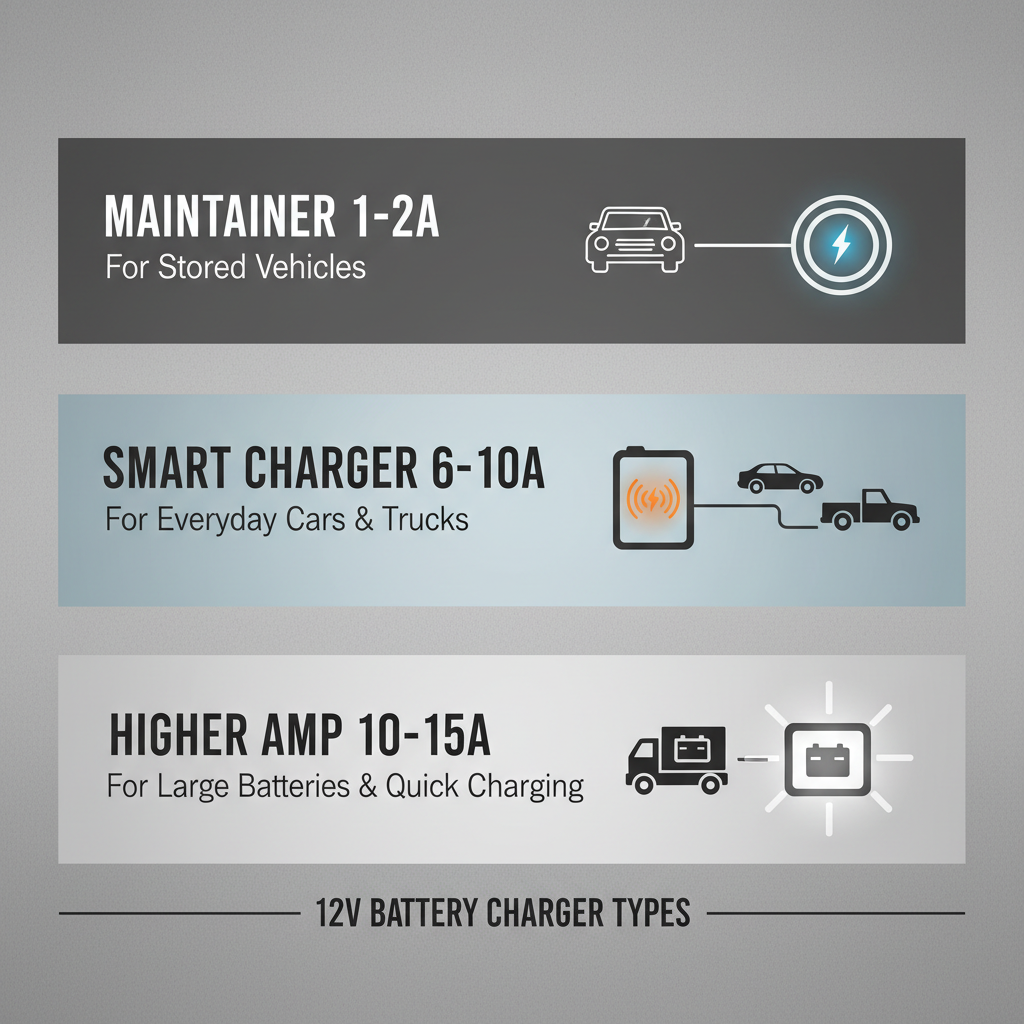
Higher amps usually means faster charging, but there’s a point where it’s just unnecessary for a typical passenger car. For many drivers, 6–10 amps lands in the sweet spot.
- 1–2A: maintainers for storage, slow but steady.
- 4–6A: gentle recovery, good for smaller batteries or cautious charging.
- 8–15A: faster recovery, helpful for larger batteries or frequent use.
3) Safety and usability: reverse polarity, spark protection, temperature
These sound like checkboxes, but they’re the difference between “easy” and “annoying.” Look for:
- Reverse polarity protection (alerts you, won’t charge).
- Spark-resistant clamps, especially if you’re charging in tighter spaces.
- Temperature compensation if you charge in very hot or very cold garages, since charging voltage targets can shift with temperature.
According to National Fire Protection Association (NFPA), safe practices around electrical equipment and combustible environments matter, so treat charging like a real electrical task: ventilate, avoid sparks near fumes, and keep cords/clamps in good shape.
4) “Repair/desulfation” modes: helpful sometimes, not a miracle
Some automatic chargers include a recondition or desulfation mode. In many cases it might help a lead-acid battery that has been sitting discharged, but it won’t resurrect a battery with a shorted cell or severe internal damage.
If a charger claims it can “restore any battery,” treat that as marketing, not a guarantee.
Shortlist: automatic 12V charger types worth considering
Instead of chasing a single winner, it’s more realistic to pick the right category. Most of the time, one of these covers what you need.
- Smart automatic charger (6–10A): the general-purpose choice for a daily driver, handles recovery and ongoing maintenance.
- Maintainer/tender (0.75–2A): for storage, seasonal vehicles, and “I just want it to be ready.”
- Higher-output smart charger (10–15A): for larger vehicles, frequent charging, or faster turnarounds.
- Charger with lithium mode: only if you truly have a lithium 12V battery (common in some powersports/overland setups).
If you want one unit to do everything, aim for a smart charger that includes a maintenance/float mode plus selectable battery types.
Self-check: what you should confirm before you buy
This is the quick “avoid the wrong purchase” list. If you can answer these, you can shop confidently.
- Battery chemistry: flooded, AGM, or lithium?
- Battery size: typical car vs large truck/SUV?
- Use pattern: daily driving, weekend use, or storage?
- Where you charge: indoor garage, outdoor driveway, extreme temps?
- Connection preference: clamps only, or quick-connect ring terminals for easy plugging in?
- Power access: do you have a nearby outlet, and is the cord length realistic?
If you’re shopping because the battery keeps dying, pause and ask one more thing: is it the battery, or is it the car. A charger can’t fix a parasitic draw or a failing alternator.

How to use an automatic 12V charger safely (simple, real-world steps)
Most smart chargers are straightforward, but the small details prevent headaches.
- Step 1: Identify the battery type and select the matching mode (standard/AGM/lithium).
- Step 2: Connect clamps correctly (positive to positive, negative to negative, or follow the vehicle manual for chassis ground recommendations).
- Step 3: Plug in, then start charging. Many chargers auto-detect, but you still want the correct mode set.
- Step 4: Let it finish the cycle. Stopping early can leave a battery undercharged, especially in cold weather.
- Step 5: For storage, switch to maintain or use a maintainer that holds float voltage.
If you see swelling, strong odor, or hissing, stop charging and move cautiously. That can indicate a battery fault, and it may be safer to consult a professional.
Common mistakes that make “automatic” chargers feel useless
- Buying too small for recovery: a maintainer is great for storage, but painfully slow when the battery is deeply discharged.
- Using the wrong mode: charging AGM on a standard setting sometimes works, sometimes disappoints, and sometimes shortens life.
- Bad clamp contact: corrosion or loose clamps leads to error codes or slow charging, even with a good charger.
- Assuming the charger fixes everything: if the alternator is weak or there’s a parasitic drain, the battery will keep dying.
- Ignoring battery age: a battery near end of life can show “charged” but drop voltage quickly under load.
One more practical tip, if you keep a charger in the trunk for emergencies, check that it’s rated for the temperatures you’ll actually see, and consider a model with a clearer display so you’re not guessing what it’s doing.
When it’s smarter to get help (or test the system)
If you’re repeatedly charging and the car still struggles, a basic diagnostic saves time. Many auto parts stores can test batteries and charging systems, and a repair shop can check for parasitic draw.
- Get the battery tested if it won’t hold voltage after a full charge cycle.
- Check alternator output if the battery dies after driving normally.
- Ask for a parasitic draw test if the battery dies after sitting overnight or over a weekend.
Electrical work can involve sparks and short circuits, so if you’re unsure about connections or see damaged cables, it’s reasonable to consult a qualified mechanic.
Key takeaways (so you can choose quickly)
- Match the charger to battery chemistry, especially AGM vs lithium.
- 6–10A smart automatic chargers fit most passenger cars for recovery and maintenance.
- Maintainers are for storage, not fast fixes.
- Safety features like reverse polarity and spark protection make home charging less stressful.
Picking from the best car battery chargers for 12v is mostly about being honest about your situation: storage vs recovery, standard vs AGM, and how quickly you need the car back on the road.
Conclusion: the “best” charger is the one you’ll actually use
If your main problem is surprise dead batteries, choose a smart automatic charger with the right battery mode and a realistic amp rating for your vehicle. If the car sits, prioritize a maintainer you can leave connected without drama.
Your next step can be simple: confirm your battery type, decide whether you need recovery speed or long-term maintenance, then buy within that lane and set it up with a clean, reliable connection.
FAQ
What amp charger is best for a 12V car battery at home?
For many drivers, a smart charger in the 6–10A range is a comfortable balance of speed and gentleness. If you mainly maintain a stored vehicle, 1–2A is usually enough.
Are automatic chargers safe to leave on overnight?
Many smart chargers are designed for overnight charging and will taper or switch to float, but “safe” still depends on correct mode, battery condition, and using the charger as directed. If anything looks abnormal, stop and reassess.
Can I charge an AGM battery with a regular 12V charger?
Sometimes it works, but it’s not ideal. AGM batteries often do better with an AGM setting that targets the right charging profile, so if your vehicle uses AGM, it’s worth buying a charger that supports it.
Do I need a special charger for a lithium 12V car battery?
Usually yes. Lithium 12V batteries often require a charger with a dedicated lithium mode. If you’re unsure your battery is lithium, check the label rather than guessing.
Why does my charger say “fully charged” but the car still won’t start?
A battery can show full voltage but fail under load due to age or internal damage. It can also be a starter, alternator, or connection issue, so a battery/load test is a good next step.
Is a battery maintainer the same as a battery charger?
Not really. A maintainer is meant to keep a healthy battery topped up over time, while a charger is better for recovering a discharged battery. Many smart chargers can do both, but small maintainers are slow for recovery.
What features matter most when comparing smart chargers?
Battery type modes (standard/AGM/lithium), appropriate amps for your use, and protections like reverse polarity and spark resistance tend to matter more than extra “repair” claims.
If you’re trying to pick a charger and you’re stuck between two models, the quickest way to decide is to match your battery type and use pattern, then choose the unit with clearer controls, safer protections, and connectors you’ll actually want to use every time.