
How to diagnose car bad spark plug wires symptoms usually comes down to separating ignition problems from fuel or sensor issues, then confirming with a few quick checks you can do safely at home.
If your car shakes at idle, stumbles under load, or suddenly feels down on power, plug wires are one of the cheaper suspects, but they’re also easy to misjudge. A rough-running engine can come from worn spark plugs, a failing ignition coil, a vacuum leak, or even a clogged injector, so guessing often wastes time and money.

This guide focuses on what bad spark plug wire symptoms look like in real driving, how to tell if wires are the likely cause, and how to test them without turning it into a weekend project. I’ll also flag when it’s smarter to stop and get a professional diagnosis, because ignition faults can overlap and a wrong move can damage coils or catalysts.
What spark plug wires do (and why they fail)
Spark plug wires carry high voltage from the ignition coil to each spark plug. On older systems, they’re a major wear item. On many newer vehicles you might have coil-on-plug (no long wires), but plenty of engines still use wires or short leads.
Failure usually comes from heat, oil contamination, age-hardened insulation, or boots that stop sealing well. Tiny cracks can let voltage leak to ground, which creates misfires that feel random, especially when the engine is under load or humidity is high.
- Insulation breakdown: voltage “leaks” through the jacket instead of reaching the plug.
- High resistance: conductor degrades, limiting spark energy.
- Boot damage or poor contact: loose terminal, corrosion, or torn boot causes intermittent connection.
- Routing issues: wires touching hot components or crossing incorrectly can induce crossfire on some engines.
Bad spark plug wire symptoms you’ll actually notice
Some symptoms are obvious, others are subtle and easy to blame on “bad gas.” Here are the patterns that most often point toward wires, especially on engines that still use a distributor or shared coils.
- Rough idle or shaking at stoplights: usually worse when the engine is warm.
- Misfire under acceleration: a stumble when you tip into the throttle or climb a hill.
- Hard starting: extended cranking, especially in damp weather.
- Noticeable loss of power: the car feels “flat,” and passing takes more throttle.
- Poor fuel economy: misfires waste fuel, sometimes without dramatic drivability issues.
- Check Engine Light: often flashing during active misfires; common codes include P0300–P0308.
- Arcing or ticking sound: in a dark garage you may see faint sparks; sometimes you hear a rhythmic tick.
According to the National Highway Traffic Safety Administration (NHTSA), a flashing Check Engine Light indicates a misfire severe enough that it can damage the catalytic converter, so it’s generally a “reduce load and diagnose now” situation.
Quick differentiation: wires vs plugs vs coils vs fuel
Before you buy parts, it helps to line symptoms up with likely causes. This isn’t perfect, but it prevents the most common misdiagnoses.
| Symptom pattern | More suggestive of | Why |
|---|---|---|
| Misfire gets worse in rain/humidity | Plug wires or boots | Moisture encourages voltage leakage across cracked insulation |
| Single-cylinder misfire code (P0302, P0304, etc.) | Plug, wire, coil, injector | Any one component can fail on that cylinder; testing matters |
| Misfire mainly under load, smooth at idle | Wires, coils, plugs | Higher cylinder pressure needs stronger spark, weak ignition shows up then |
| Misfire at idle that improves with RPM | Vacuum leak, EGR, idle air issues | Airflow/fueling problems often dominate at idle |
| Fuel smell, long crank, random stumble | Fuel delivery/injector issues | Mixture problems can mimic ignition misses |

Key point: wires are a strong suspect when symptoms change with moisture, when you see visible arcing, or when the wires are clearly aged, brittle, oil-soaked, or burned near the exhaust.
Self-check checklist (5–10 minutes, no special tools)
If you’re trying to decide whether you’re in “inspect/replace wires” territory, this checklist usually gets you 80% of the way there.
- Visual condition: look for cracks, shiny “tracking” lines, swelling, or melted spots.
- Boot fit: each boot should seat firmly on the plug and coil/distributor; loose boots often mean weak contact.
- Oil contamination: oil in plug wells (common on some engines) can mimic wire failure and causes boots to deteriorate.
- Wire routing: compare to a routing diagram if available; wires laying on hot metal or crossing tightly can create issues.
- Night check for arcing: in a dark area, with the engine idling, look for tiny blue arcs around wires. Keep hands away from moving parts and high voltage.
According to OSHA, employers should control hazards from electrical exposure; for DIYers, the practical takeaway is simple: treat ignition components as high-voltage, avoid touching wires with the engine running, and keep loose clothing away from belts and fans.
Practical tests to confirm bad plug wires
When the quick checks suggest wires, these tests add confidence before you spend money. Pick the ones that match your comfort level.
1) Resistance test with a multimeter
Many spark plug wires have a spec range for resistance, often expressed per foot. Exact numbers vary by design, so the goal is consistency: one wire that reads dramatically higher than the others is suspicious.
- Engine off, key off, let components cool.
- Remove one wire at a time, don’t mix up cylinder order.
- Measure resistance end-to-end, then compare across all wires.
- Red flag: an open circuit, or one wire far higher than the rest at similar length.
2) Swap test (when you have a single-cylinder misfire)
If you have a code like P0303, you can move that cylinder’s wire to another cylinder (only if the lengths and routing allow it safely). Clear codes and recheck after a short drive.
- If the misfire “moves” to the new cylinder, the wire becomes a top suspect.
- If it stays put, look harder at the plug, coil, injector, or compression.
3) Spark tester (more definitive than guessing)
An inline spark tester shows whether spark is strong and consistent. It’s safer than improvised methods like holding a wire near metal.
- Install tester between the wire and plug, then crank/start.
- Weak, intermittent flashes under throttle blips can point to wire or coil issues.
4) OBD2 misfire data (if your scanner supports Mode $06)
Some scan tools show misfire counts per cylinder even when the Check Engine Light is off. This helps you spot a “quiet” problem early.
If you’re still wondering how to diagnose car bad spark plug wires symptoms when codes are vague, misfire counters plus a resistance check is usually the cleanest combo without deep tools.
Fix options: when to replace wires, and how to do it cleanly
If tests and condition point to the wires, replacement often makes sense because wires age as a set. Replacing only one can work short-term, but it’s common to chase the next weak wire a month later.
- Replace wires as a set (and often spark plugs too, if they’re due).
- Match OEM length and routing; universal cut-to-fit sets can work, but they demand careful assembly.
- One wire at a time to avoid mixing firing order.
- Use dielectric grease sparingly inside boots if the manufacturer recommends it; it helps sealing and future removal.
- Address root causes: oil in plug wells, broken looms, missing heat shields.
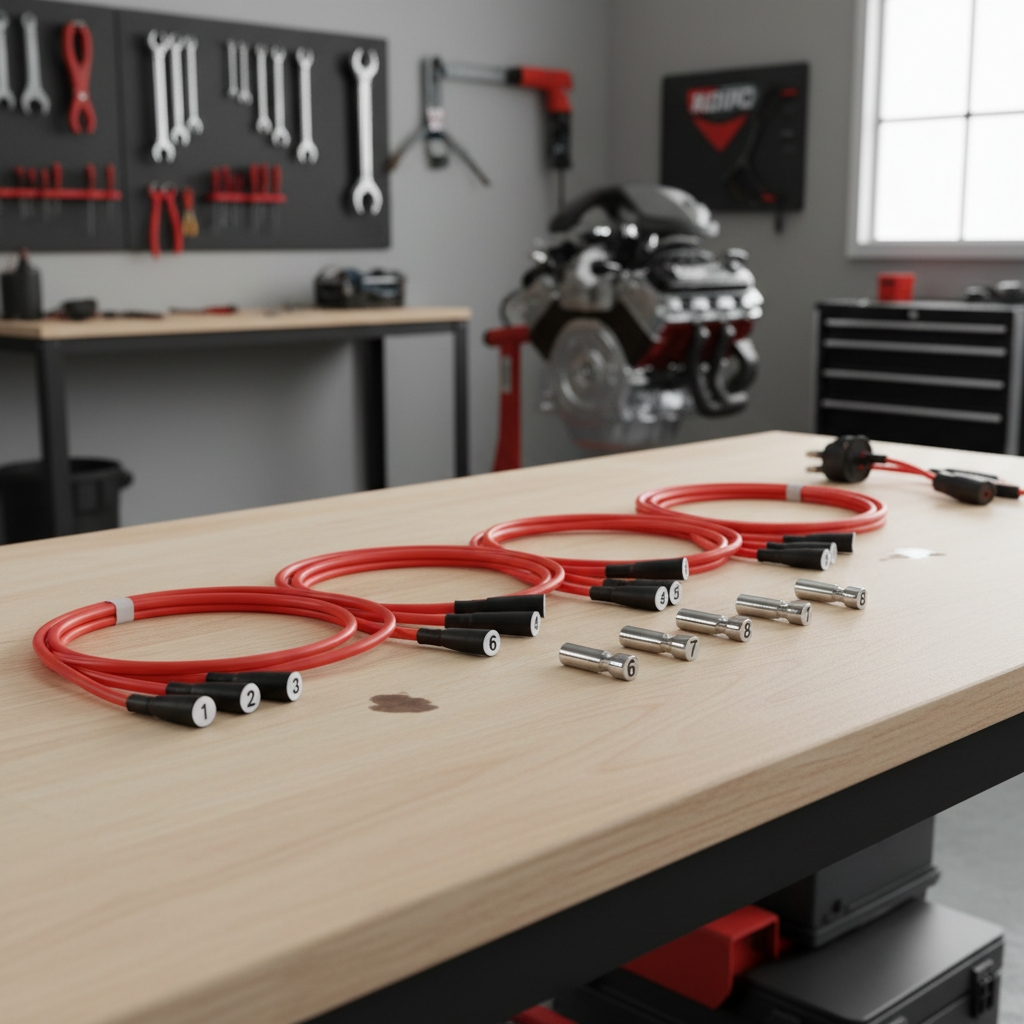
Real-world tip: if your engine uses coil packs with short leads, inspect the coil boots too. Many “wire symptoms” on modern setups are actually boot or coil issues, and the fix changes.
Common mistakes that waste time (or create new problems)
- Replacing wires without checking plugs: a worn plug gap can force higher voltage and accelerate wire breakdown.
- Pulling on the wire instead of the boot: this can damage the terminal connection internally.
- Ignoring routing clips and separators: loose wires can touch exhaust parts or crossfire.
- Assuming any misfire means wires: vacuum leaks and failing coils are frequent look-alikes.
- Driving hard with a flashing CEL: catalyst damage is a real risk, and repairs get expensive fast.
If you’ve been stuck in a loop of “replaced parts, still misfires,” that’s a sign to slow down and treat it like a diagnosis problem, not a parts problem.
When it’s time to get professional help
DIY checks cover a lot, but some cases are better handled with proper diagnostic equipment.
- Flashing Check Engine Light or severe shaking that makes the car unsafe to drive.
- Repeated misfire after new wires/plugs, which can point to a coil driver, injector, compression loss, or timing issue.
- Misfire plus fuel trim codes (lean/rich) where the root cause may be air leaks or fuel pressure.
- Modern ignition systems where access is tight and mistakes can damage connectors or coils.
A shop can use an oscilloscope, coil stress tests, smoke testing for vacuum leaks, and cylinder balance checks. If you’re unsure, asking for a clear diagnostic plan before authorizing parts often keeps the process honest and efficient.
Conclusion: a simple path to a confident diagnosis
If you’re learning how to diagnose car bad spark plug wires symptoms, focus on patterns you can trust: moisture sensitivity, visible arcing, uneven resistance, and misfire movement when swapping components. Pair that with a quick plug inspection and you’ll usually know whether wires deserve replacement or whether you should keep hunting.
Action step one: run the visual check plus a resistance test, write the readings down so you’re not relying on memory. Action step two: if the Check Engine Light flashes or the car bucks hard under load, ease off and schedule a proper diagnosis before it turns into a catalytic converter problem.
FAQ
- Can bad spark plug wires cause a Check Engine Light without obvious shaking?
Yes, in many cases the ECU detects misfires before you feel them, especially at steady cruise. A scan for pending misfire codes and misfire counters can catch this early. - What does arcing from spark plug wires look like?
Often it’s a faint blue snap or tiny lightning-like line in a dark garage. If you see it, treat it as a strong clue of insulation breakdown, but still inspect plugs and boots too. - How do I know if it’s wires or the ignition coil?
If swapping the wire moves the misfire, that favors the wire. If swapping the coil moves the misfire on coil-near-plug systems, that favors the coil. When neither swap changes the cylinder, look at injector or compression. - Do I need to replace spark plugs when I replace plug wires?
Not always, but it’s commonly smart if plugs are near their service interval. Fresh plugs reduce required voltage and can help new wires last longer. - Is it safe to drive with bad spark plug wires?
Sometimes the car still runs, but misfires can damage the catalytic converter and leave you stranded. If the CEL flashes or the engine runs very rough, it’s safer to minimize driving and diagnose promptly. - What multimeter reading means a spark plug wire is bad?
There isn’t one universal number across all designs. Look for an open circuit or a wire that reads dramatically higher than similar-length wires, and confirm with symptom patterns or a spark tester. - Why does the misfire feel worse in wet weather?
Moisture makes it easier for high voltage to track across cracked insulation or dirty boots. That’s why wet-weather stumbles often point toward wires, boots, or coil insulation issues.
If you’d rather skip the guesswork, or you want a clearer answer than “it might be wires,” a basic OBD2 scan plus a targeted ignition test (spark tester or scope at a shop) is often the most time-efficient way to confirm the real cause before buying parts.